2025-8-22
下面这个梅森葡萄藤浮雕(Weinlaub)的杯子,原以为是1740-1750年代早期试验阶段生产的。
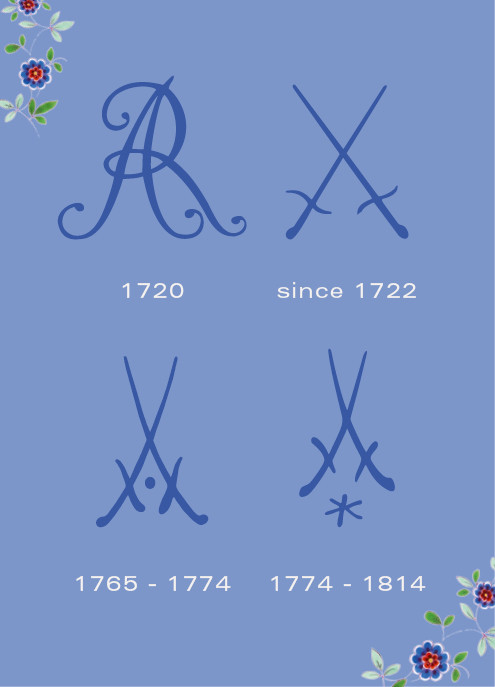
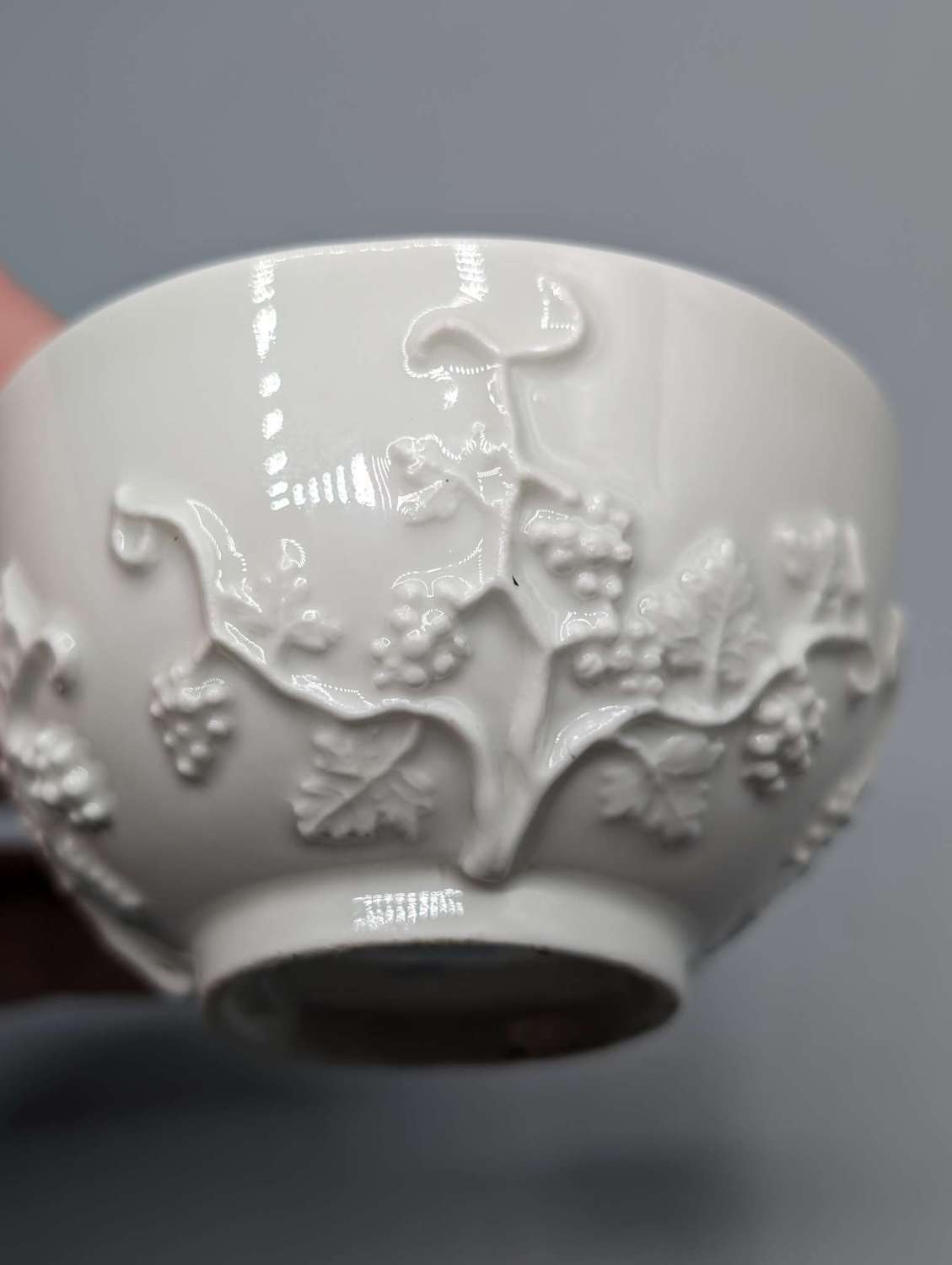
1740s–1750s → The first relief-moulded vine-leaf decoration appeared at Meissen, introduced under Johann Joachim Kändler (chief modeller). Around 1774–1775 → The design was standardized into the “Weinlaub” service, with cups, saucers, plates, and pots decorated with grapevine reliefs, sometimes with green-painted leaves, sometimes left all-white (Blanc de Chine style, like yours). 19th century → The service continued in production, since it was very popular with aristocracy. By this point, it became one of Meissen’s “classic” patterns, still offered into the 20th century.
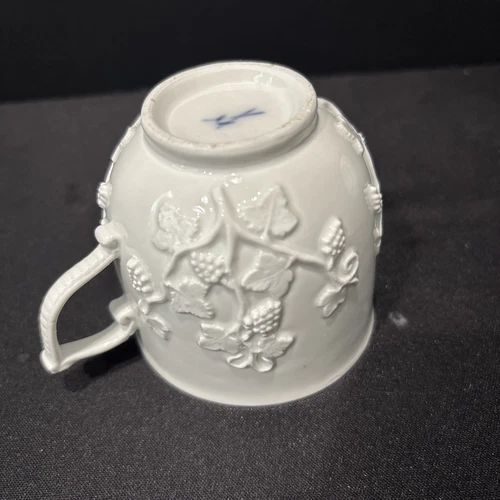
ChatGPT给出的年代,则是稍晚一点的1780-1795年代:
再贴一张更清晰的照片,ChatGPT给出了更肯定的意见:
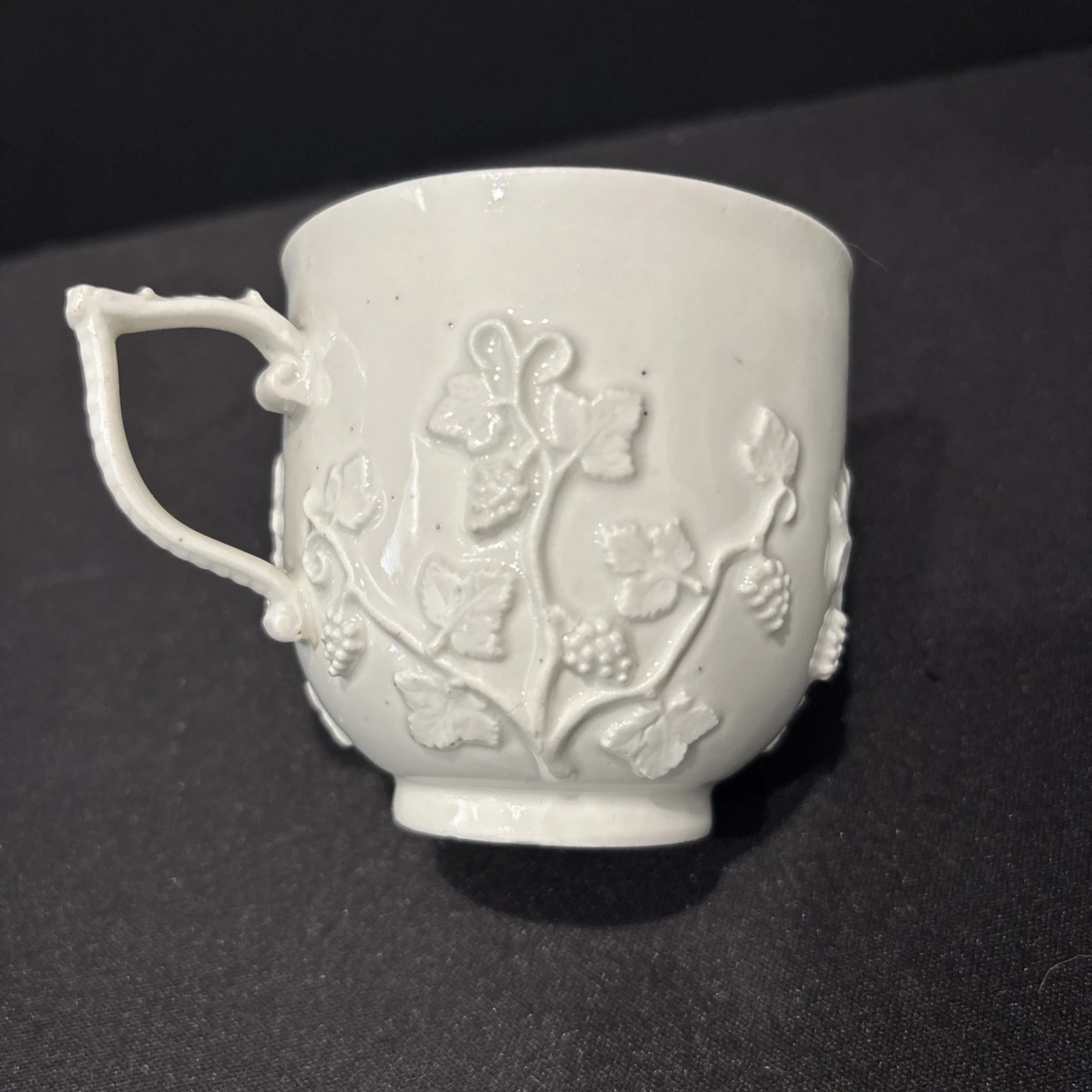
1、HandleVery thin, sharply edged, and slightly irregular in curvature. The little thorn-like prongs on the top of the handle are classic late 18th century Meissen Rococo style (these disappear or get simplified in 19th century versions).
2、Relief DecorationThe grape leaves are deeply modelled, with crisp veins and sharp berry clusters. This sharper relief is typical of earlier moulds (1770s–1790s). By 1800–1815, the reliefs soften, and leaves often look more “rounded.”
3、Body ShapeThe cup has a slightly flared lip and a short footring. This shape is also consistent with late 18th century Meissen teawares, right around 1780–1795.
|