Without a global navy, China has to contend with the nightmare of a US-led blockade. Understandably, therefore, Beijing is striving to impose its version of the Monroe Doctrine on the South China Sea and beyond. This, however, unavoidably deepens and widens the existing geopolitical fault lines in the Pacific region. Consequently, the Taiwan Strait looks more and more like the sum of all dire straits. In dire straits, to paraphrase Machiavelli, people had better start worrying about the calm before the storm. The storm might well be a nightmare come true.
Taipei, too, has a nightmare to contend with: At the stroke of a pen, Britain signed away Czechoslovakia in the Munich Agreement of 1938. In theory at least, the US could do the same to Taiwan. It's little wonder that Taiwan spares no effort to cultivate an enduring friendship with the Czech Republic -- as a reminder of conscience to the free world.
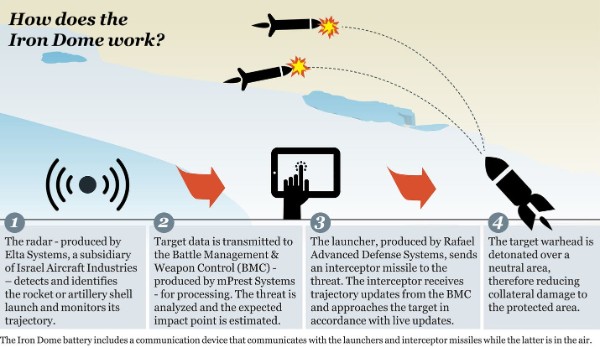
In the meantime, Taiwan openly keeps dozens of US military advisors and incessantly asks Washington to upgrade the island nation's defense system. Speaking of which, China's possible infiltration in the Taipei government may keep the US on its toes, so much so that Washington is dragging its feet over Iron Dome* for Taiwan's air defense. Quite frankly, Iron Dome would not be adequate to fend off China's hypersonic missiles (if indeed they're the real deal). That being said, whoever lets hypersonic missiles fly to Taiwan could be boomeranged on. It won't be a pretty sight at the end of the day.
Sharing Taiwan's angst, Ukraine, having lost Crimea to Russia, is impressed by and interested in Israel's Iron Dome**. Taiwan must be no less impressed or interested. As a matter of fact, Taiwan, Ukraine, and Israel are all constantly under threat, if not also under siege. Fortunately one of them happens to be a US arms dealer.