The United States and China are racing to the bottom of the South China Sea. Or are they?
An F-35C aircraft reportedly fell off the carrier USS Carl Vinson in a landing mishap on Monday, January 24, 2022. This is a USD 100-million state-of-the-art Stealth that the US vows to recover.
In a mild diplomatic tone China expresses its concern but declares no intention to interfere with the US recovery mission in any manner. Beijing has not even mentioned, as it habitually does, that the South China Sea is under China's jurisdiction. Coincidentally, though, China has just made waves of incursions into Taiwan's airspace.
As expected, there is no lack of speculation on social media that China is simply hoodwinking the US into buying its non-interference policy. In fact, so the speculation goes, China is clandestinely probing the sunken Stealth for its cutting-edge technologies. However, no one has yet to detail how China can go about this probing business without attracting attention from the US. Hardly anyone, meanwhile, wonders aloud if the ill-fated Stealth has a built-in self-destruct system.
Putting speculation aside, there appears to me a mutual understanding between China and the US where recoveries are concerned. It makes sense to both sides because mishaps may happen to either side. That being said, China won't give up any opportunity to monitor US operations in the South China Sea, which is entirely conceivable. Indeed, the US will conceivably do the same to China.
My major takeaway from this episode is that China once again demonstrates its defensive stance. It will take at least a generation (20-30 years) for China's navy to impact the seven seas. Needless to say, the US and Japan are not standing still.
Author: Lingyang Jiang
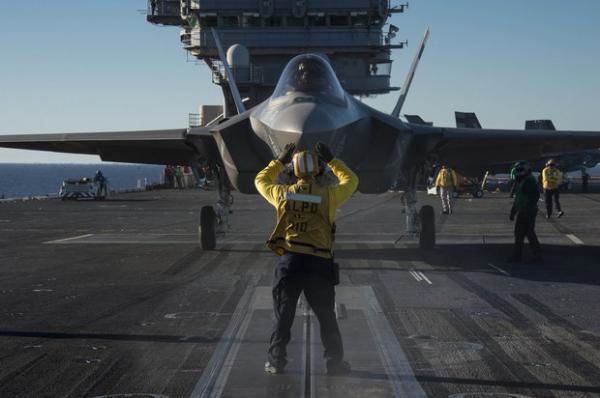
F-35C Stealth Aircraft (Google image)