



| 作為“民生起點”的英國經濟學傳統 |
| 送交者: 孞烎Archer 2025年09月26日15:49:29 於 [天下論壇] 發送悄悄話 |
|
作為“民生起點”的英國經濟學傳統 The British Economic Tradition as the “Starting Point of People’s Livelihood”
——從普特尼辯論到共生經濟學 — From the Putney Debates to Symbionomics
錢宏(Archer Hong Qian) 2025年9月 · 蘇格蘭 SKYE
一、普特尼辯論:經濟與民生的奠基時刻(1647)
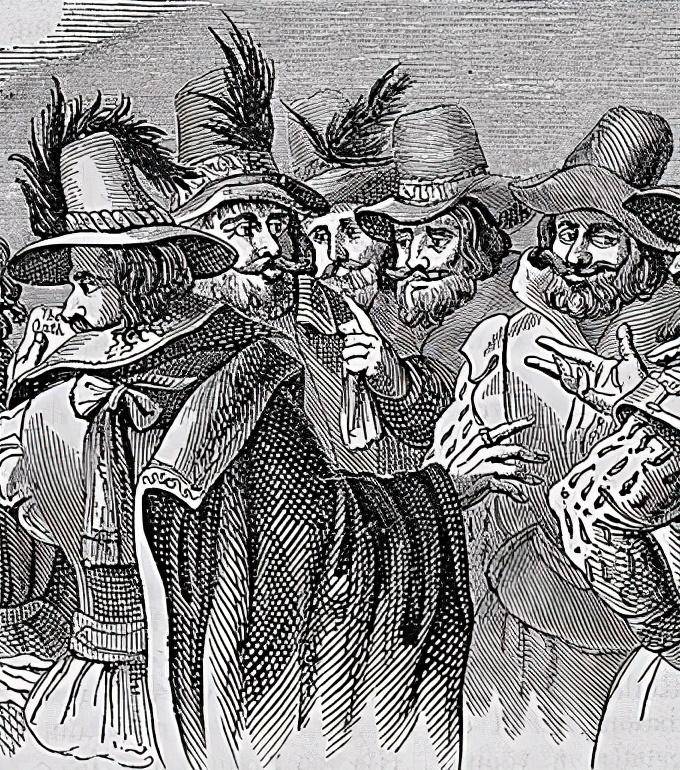
1647年,英國內戰期間,新模範軍在泰晤士河畔普特尼(Putney)舉行大辯論:是否人人都有選舉權?獨立派與平等派代表首次把政治權利與經濟民生結合起來討論:土地歸屬、稅收制度、勞動保障。第一次把普通士兵、佃農的經濟處境上升為國家治理問題。其歷史意義中,經濟(Economy)首次被置於“公共生活的中心”,奠定了英國經濟學傳統的民生根基。
這是英國經濟學思維的“民生起點”。
二、威廉·配第(William Petty,1623-1687):政治算術與國富視角
配第在《政治算術》(Political Arithmetick, 1690)中提出用數量化方法研究國家財政、人口、土地與勞動。他強調國家力量與社會生產的互動,是最早把經濟學作為科學化研究的嘗試:經濟 ≠ 倫理說教,而是可測度、可計算的社會現象。
這是“經驗主義—數量化”的經濟學開端
三、約翰·洛克(John Locke,1632–1704):公私界限與財產權
洛克在《政府論·下篇》(Two Treatises of Government, 1689)中提出勞動創造財產的原則,闡明”財產不可公有、權力不可私有”,第一次明確了公私法權的界限。他把市場與政治秩序、個人自由直接聯繫起來,強調經濟秩序與個人自由掛鈎:勞動價值使自然物成為“我的”財產,政府存在的首要目的就是保護財產權。
這是“財產權經濟學”的哲學奠基。
四、大衛·休謨(David Hume,1711–1776):貨幣、貿易與國際平衡
休謨在《政治論文集》(Political Discourses, 1752)中提出“價格—貨幣—貿易”機制,闡明貨幣流通對國際收支及國家興衰的作用。他的經驗主義方法,強調通過觀察與邏輯分析理解經濟現象。提出:貨幣數量論、貿易順差批判,強調金銀只是“流通工具”,真正的財富在生產與勤勞;把人性中的“激情與習慣”放進經濟與社會運行邏輯。
這一“貨幣—貿易—人性”三者結合的分析框架,是“經驗主義方法論”進入經濟學的開始。
五、亞當·斯密(Adam Smith,1723–1790):分工、市場與道德哲學
斯密首先在《道德情操論》(1759)中強調同情心(sympathy)與道德情感的重要性,指出經濟活動應服務於社會生活而非純粹利益,市場不是冷冰冰的,而是嵌入道德情感的。在《國富論》(1776)提出分工與市場機制是推動財富增長的核心,突出強調分工、“看不見的手”、市場秩序的自組織。 這是“生命自組織—市場”奠基性思維原點。 六、大衛·李嘉圖(David Ricardo,1772–1823):分配與比較優勢
李嘉圖在《政治經濟學及賦稅原理》(1817)提出比較優勢理論,同時分析地租、工資與利潤的分配關係,使經濟學既具國際貿易互利共贏意義,又關注社會分配衝突:地租、工資、利潤三分法,直接關聯社會階層利益。
這是首次把全球化的“勞動—分配—貿易”確立為宏觀與微觀研究的雙重核心。
七、傑里米·邊沁(Jeremy Bentham, 1748–1832):功利主義與幸福尺度
邊沁在《道德與立法原理導論》(1789)確立功利主義,提出“最大多數人的最大幸福”,為經濟政策提供倫理標準,提倡法制與制度改革,打通經濟學與公共政策,第一次把幸福作為衡量經濟的價值尺度。
這是“制度設計—社會福利”的實踐導向。
八、阿爾弗雷德·馬歇爾(Alfred Marshall, 1842–1924):生活科學的經濟學
馬歇爾在《經濟學原理》(1890)中把經濟學定義為“研究人類在日常生活中如何謀求福利的科學”,既重視短期,也重視長期的產業演進:強調均衡、邊際效用、部分均衡分析“時間因素”,對供需、彈性及福利的重要性,奠定新古典經濟學的框架。
他使經濟學從“政治經濟學”轉化為現代的“經濟科學”,在斯密—李嘉圖的宏觀傳統與之後的微觀分析之間架起橋梁。
九、約翰·梅納德·凱恩斯(John Maynard Keynes, 1883–1946):需求、貨幣與政府責任
凱恩斯早在《貨幣改革論》(1923)和《貨幣論》(1930)中分析貨幣流動性與利率對投資的作用。在《就業、利息和貨幣通論》(1936)提出有效需求理論,回應大蕭條,批判“市場自動出清”,提出“有效需求不足”理論,認為市場並非自動均衡,需要政府通過財政與貨幣政策保障就業和經濟穩定:提出總需求、乘數效應、財政赤字政策,從而把國家重新帶回市場秩序核心,構建“福利國家”與二戰後布雷頓森林體系的理論支柱,也把貨幣從“單純交換媒介”轉變為“宏觀調控核心”,從而奠定了現代中央銀行與財政—貨幣雙支柱治理框架。 把“政府—市場—就業”確立為現代宏觀經濟學的三大支點。
十、英國經濟學的完整線索及當代問題
1. 普特尼辯論:政治權利與經濟公平 → 民生起點 2. 配第:政治算術 → 經驗與數量化 3. 洛克:財產權與有限政府 → 財產權哲學 4. 休謨:貨幣數量論、人性邏輯 → 貨幣—貿易—人性 5. 斯密:分工與道德情感 → 市場自組織 6. 李嘉圖:比較優勢與分配理論 → 全球化邏輯 7. 邊沁:功利主義與制度改革 → 制度設計 8. 馬歇爾:供求均衡與邊際分析 → 新古典體系 9. 凱恩斯:有效需求和供給與政府干預 → 宏觀調節
一條英國經濟學思維的譜系,基本就是:政治權利起點 → 財產權與自由 → 市場與道德 → 全球貿易與分配 → 功利制度 → 均衡科學化 → 政府宏觀與市場微觀調節的結合。可以說,從早期內戰時期的民生政治經濟起點,到 20 世紀的宏觀治理,英國經濟學既是哲學思考的延伸,也是應對國家政治經濟文化危機的工具。
總之,整條線索展現出英國經濟學思維的獨特性:它不僅有抽象的學理甚至數理推演,而且是伴隨憲政、市場與社會變遷的“政治—道德—經濟”生活一體化的探索。然而,由於20世紀以來全球意識形態混雜與認知偏蔽,這一探索逐漸脫離了人類“生活-生態-生命”的常識與“家庭第一、社區優先、政府服務”的傳統,為特權逐利大開方便之門,也為各個國家和區域及普通國民政治、經濟、文化行為滑向“通往奴役之路”提供了大量範本。
於是,當代經濟學家們只是用不同方式解釋,在社會與國際分工中有沒有“免費的午餐”,並圍繞着多重“兩極分化”及其供需義利矛盾,講述着新老“資本論”的故事;他們不僅讓自己陷入“市場自由與政府管控世紀鐘擺周期性困境”,也讓世界徒生出各種分裂與衝突。然而問題在於,追求高額資本增殖,卻脫離生活常態的生產,已然超出自然、社會、人的身心靈健康可承受極限,那麼,超系統改變,何以可能?
這就是共生經濟學面對的問題。
十一、作為“民生起點”的傳統與共生經濟學再出發
從普特尼辯論經斯密到凱恩斯,英國經濟學一以貫之的特徵是:
經濟即民生:經濟學從來不是抽象算術,而是公共生活的秩序。 財富為幸福:生產與分配的意義在於改善人民生活,而非權力積累。 國家與市場的平衡:無論是配第、斯密還是凱恩斯,目的都是服務社會。
進入AI與新全球化時代,我們需要在這一傳統上再出發,邁向新階段:
生產必須回歸生活,生活需要呈現生態,生態才能激勵生命。
共生經濟學新理念結合AI與數據驅動,可能促進以下五個層面的工作:
第一、從“政治算術”到數據驅動的共生分析 威廉·配第的“政治算術”開啟了量化的經濟學研究。進入AI時代,數據分析與機器學習可以進一步深化對“國家—財富—人口”交互的理解。例如,通過實時分析全球供應鏈、資源分配與生態影響,AI可以幫助識別“健康黃金率”的量化指標,優化生產與生態的平衡。
第二、市場與生態的動態平衡 亞當·斯密的“市場自組織”與“生命自組織”在發生學、動力學上的表里關係。AI可以通過模擬複雜系統(如家庭、社區、市場、生態、社會網絡),預測市場失靈或生態危機的潛在風險。例如,AI模型可以分析資源效能、資源消耗與經濟增長、經濟健康的關係,為政策制定提供數據支持,推動“生態—經濟”共生。
第三、幸福與福利的重新定義 邊沁的“最大幸福”原則在AI時代需要交互主體共生的新詮釋。AI可以通過多維數據(如綜合反應個體生命自組織連接順暢度、健康生活、心智教育、靈魂安頓“六大資產/資源負債表”)構建更全面的“幸福指數”,超越傳統GDP指標,助力共生經濟學以“健康黃金率”為基準,優化資源效能的GDE指標。
第四、政府與市場的AI協同 凱恩斯的政府干預理論在AI時代可以進一步擴展優化。AI可以輔助政府進行精準的財政與貨幣政策設計,例如通過預測模型優化就業支持、基礎設施投資或循環經濟轉型計劃。同時,AI也能通過區塊鏈等技術增強市場透明度,減少信息不對稱,助力自洛克-哈耶克公私界線恊和平衡,以走出“市場自由與政府管控的周期性世紀鐘擺困境”。
第五、共生經濟學的全球實踐 共生經濟學強調“生活-生態-生命”的連接平衡,可以重新調節全球可持續發展目標(SDGs)。AI可以通過跨國數據整合,分析自由貿易不平衡、國別政治衝突與社會不平等的交互影響,超越“蒙代爾-羅德里克-錢宏三元難題”,推動基於“共生邏輯”的國際有效互動。例如,AI可以優化全球能源網絡,平衡國別、區域性“外生邏輯”與“內生邏輯”的能源分配與交換。
這就是共生經濟學(Symbionomics):繼承英國經濟學傳統的“民生起點”,以生命自組織連接平衡的交互主體共生邏輯,以健康黃金率為基準,規範人類政治、經濟、文化三位一體行為開闢的新方向。
參看:《共生經濟學:21世紀人類政治經濟組織行為的經濟學因應之道》共生網 http://symbiosism.com.cn/7695.html 《在又一個世紀的轉折點上:哲學-共生經濟學筆記(提要、梗概)》(2020, http://symbiosism.com.cn/3876.html 《AI時代的亞當·斯密:共生經濟學的再出發》 http://symbiosism.com.cn/10823.html
The British Economic Tradition as the “Starting Point of People’s Livelihood” — From the Putney Debates to Symbionomics
Hong Qian (Archer Hong Qian) September 2025 · Skye, Scotland
I. The Putney Debates: The Foundational Moment for Economics and People’s Livelihood (1647)In 1647, during the English Civil War, the New Model Army held a historic debate on the banks of the Thames in Putney: Should everyone have the right to vote? Representatives of the Independents and Levellers, for the first time, linked political rights with economic livelihood, discussing land ownership, taxation systems, and labor protections. The economic conditions of ordinary soldiers and tenant farmers were elevated to matters of national governance. Historically, this placed the economy at the “center of public life,” laying the foundation for the British economic tradition rooted in people’s livelihood. 👉 This marks the “starting point of people’s livelihood” in British economic thought, inspiring modern data-driven analyses of public welfare. II. William Petty (1623–1687): Political Arithmetic and the Perspective of National WealthIn Political Arithmetick (1690), Petty proposed quantifying national finances, population, land, and labor, emphasizing the interplay between state power and social production. His work pioneered the scientific study of economics: economics is not moral preaching but a measurable and calculable social phenomenon. 👉 This is the origin of “empiricism and quantification” in economics, extended today by AI and big data for optimizing resource allocation. III. John Locke (1632–1704): Public-Private Boundaries and Property RightsIn Two Treatises of Government (1689), Locke articulated the principle that labor creates property, asserting that “property cannot be public, but power cannot be private,” clearly delineating the boundaries between public and private rights. He linked markets with political order and individual freedom, emphasizing that economic order hinges on personal liberty: labor transforms natural resources into “my” property, and the primary role of government is to protect property rights. 👉 This is the philosophical foundation of “property rights economics,” inspiring blockchain applications for transparent property systems. IV. David Hume (1711–1776): Money, Trade, and International BalanceIn Political Discourses (1752), Hume introduced the “price-money-trade” mechanism, elucidating the role of money circulation in international balance of payments and national prosperity. His empiricist approach emphasized understanding economic phenomena through observation and logical analysis. He proposed the quantity theory of money, critiqued trade surpluses, and argued that gold and silver are mere “tools of circulation,” with true wealth lying in production and diligence. He integrated human “passions and habits” into the logic of economic and social operations. 👉 This framework combining “money-trade-human nature” marks the entry of empiricist methodology into economics, enhanced by AI-driven global trade analytics. V. Adam Smith (1723–1790): Division of Labor, Markets, and Moral PhilosophyIn The Theory of Moral Sentiments (1759), Smith highlighted the importance of sympathy and moral sentiments, arguing that economic activities should serve social well-being, not mere profit. Markets, he suggested, are not cold mechanisms but embedded in moral emotions. In The Wealth of Nations (1776), he identified the division of labor and market mechanisms as the core drivers of wealth creation, emphasizing self-organization through the “invisible hand” and market order. 👉 This is the foundational origin of “life self-organization and markets,” with AI enabling simulations of market-ecosystem balance. VI. David Ricardo (1772–1823): Distribution and Comparative AdvantageIn On the Principles of Political Economy and Taxation (1817), Ricardo introduced the theory of comparative advantage and analyzed the distribution of rent, wages, and profits. His work gave economics both a global trade perspective, promoting mutual gains, and a focus on social distribution conflicts, linking rent, wages, and profits to class interests. 👉 This established “production-distribution-trade” as the dual core of macro and microeconomic analysis, with AI aiding equitable global supply chain analysis. VII. Jeremy Bentham (1748–1832): Utilitarianism and the Measure of HappinessIn An Introduction to the Principles of Morals and Legislation (1789), Bentham established utilitarianism, advocating “the greatest happiness for the greatest number” as an ethical standard for economic policy. He connected economics with public policy through legal and institutional reforms, introducing happiness as a measure of economic value. 👉 This is the practical orientation of “institutional design and social welfare,” with AI enabling multidimensional happiness indices beyond GDP. VIII. Alfred Marshall (1842–1924): Economics as the Science of LifeIn Principles of Economics (1890), Marshall defined economics as “a study of mankind in the ordinary business of life” to achieve well-being. He emphasized short- and long-term industrial evolution, equilibrium, marginal utility, and partial equilibrium analysis with a focus on time factors, laying the foundation for neoclassical economics through supply, demand, elasticity, and welfare. 👉 He transformed political economy into modern “economic science,” bridging macro and micro traditions, with AI enhancing supply-demand forecasting. IX. John Maynard Keynes (1883–1946): Demand, Money, and Government ResponsibilityKeynes analyzed money liquidity and interest rates’ impact on investment in A Tract on Monetary Reform (1923) and A Treatise on Money (1930). In The General Theory of Employment, Interest, and Money (1936), he addressed the Great Depression with the theory of effective demand, rejecting the notion of automatic market clearing. He argued that markets do not self-equilibrate and require government intervention through fiscal and monetary policies to ensure employment and stability. His concepts of aggregate demand, the multiplier effect, and deficit spending reintroduced the state as central to market order, underpinning the welfare state and the post-WWII Bretton Woods system. He transformed money from a mere medium of exchange to a core tool of macroeconomic management, establishing the modern framework of central banking and dual fiscal-monetary governance. 👉 He established “government-market-employment” as the three pillars of modern macroeconomics, with AI enabling precise policy design. X. The Complete Thread of British Economics and Contemporary Challenges
This lineage of British economic thought reflects a progression from the political-economic starting point of people’s livelihood during the Civil War to 20th-century macroeconomic governance. It is both an extension of philosophical inquiry and a tool for addressing political, economic, and cultural crises. The uniqueness of British economics lies in its integration of abstract theory, mathematical reasoning, and the exploration of a “politics-morality-economy” continuum, shaped by constitutional, market, and social transformations. However, since the 20th century, global ideological complexities and cognitive biases have led this tradition to drift from the commonsense principles of “life-ecology-humanity” and the priorities of “family first, community priority, government as service.” This drift has opened the door to elite profiteering and provided models for political, economic, and cultural behaviors that lead nations and individuals toward “the road to serfdom.” Contemporary economists debate whether there is a “free lunch” in social and international divisions of labor, grappling with polarization and supply-demand conflicts. Yet, the pursuit of capital accumulation, detached from everyday life, has exceeded the limits of natural, social, and human well-being. How, then, can systemic change be achieved? 👉 This is the challenge Symbionomics seeks to address. XI. The Tradition of “People’s Livelihood” and the New Departure of SymbionomicsFrom the Putney Debates through Smith to Keynes, the British economic tradition consistently emphasizes:
In the era of AI and new globalization, we must build on this tradition and advance to a new stage: Production must return to life, life must reflect ecology, and ecology must inspire life. Symbionomics, combined with AI and data-driven approaches, can advance the following five dimensions:
Symbionomics inherits the “people’s livelihood” foundation of British economics, using life self-organization to connect balanced, symbiotic interactions among agents. With the “healthy golden ratio” as its benchmark, it charts a new path for integrating human political, economic, and cultural behaviors. (See “Eight Transformations” for details.) References:
|

|
|
 |
 |
| 實用資訊 | |
|
|
| 一周點擊熱帖 | 更多>> |
| 一周回復熱帖 |
| 歷史上的今天:回復熱帖 |
| 2024: | 普金威脅在本土被西方先進武器攻擊時動 | |
| 2024: | 火箭軍發射洲際導彈,是決定打台灣了還 | |
| 2023: | 明明就是彭麗媛舅舅的草鞋,哪是國民革 | |
| 2023: | 中澤克二報導的北戴河會議習近平挨訓說 | |
| 2022: | 直播 - 人類太空飛行10個月,攻擊小行 | |
| 2022: | 中國命運竟然掌握在 50 個權貴手中 | |
| 2021: | 比孟晚舟更震撼的亞利桑那大選審計出爐 | |
| 2021: | 孟晚舟獲釋內幕 | |
| 2020: | 北京通過李文亮條款,有進步 | |
| 2020: | 拜登78歲參見道德經78章,川普74歲參見 | |
