



| Hakuna Matata:成長的另一種敘事邏輯——觀歌舞劇《獅子王》 |
| 送交者: 孞烎Archer 2025年10月01日15:04:45 於 [天下論壇] 發送悄悄話 |
|
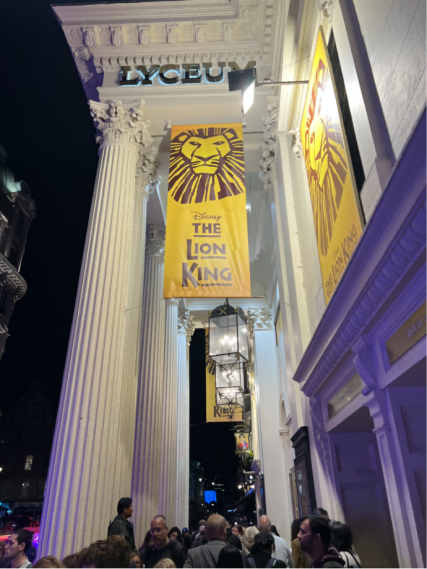
Hakuna Matata:成長的另一種敘事邏輯 Hakuna Matata: An Alternative Narrative Logic of Growth ——觀歌舞劇《獅子王》於倫敦 Lyceum Theatre — Watching The Lion King at the Lyceum Theatre, London 錢 宏Archer Hong Qian 2025.9.30 -10.1· London-Cambridge University Library
說倫敦城裡歌劇院林立,也不為過,世界十大歌劇及各種新劇目,長年輪番上演。
上一次來倫敦經濟學院參加由英國社會學會舉辦的“馬克斯·韋伯與中國國際研討會”,是2013年,到現在已經12年過去了。這次再來倫敦相對閒適,不看一場歌劇似說不過去。本想看《浮士德》或《魔笛》,可惜都不在檔期,《費加羅的婚禮》《藝術家的生涯》《鄉村騎士》《卡門》《圖蘭朵》《阿依達》《茶花女》《弄臣》《托斯卡》《奧賽羅》《蝴蝶夫人》也不巧,唯一想看的,只有《The Lion King》,而且這部由動漫改編的歌劇,二十多年前碰巧在上海大劇院看過(似是1997年版百老匯音樂劇),這劇算是經受了時間的考驗,重溫一遍想必別有意味!
一、舞台的第一聲心跳
倫敦Lyceum Theatre 的大幕緩緩拉開,鼓點像心臟一樣轟鳴,隨之而來的合唱讓全場瞬間沸騰。光影投射出草原的曙光,長頸鹿、斑馬、大象、羚羊、獅王獅後及小獅子降生⋯⋯依次登場,這並非一場宏大的仿生秀,而是用極具藝術張力的匠心面具與肢體表現,形成了一種象徵性的地球生命群舞。 這一刻,觀眾仿佛不是坐在劇院裡,而是被置入大自然的心臟搏動中。舞台上所有的個體,帶着各自的生命節奏,在大自然(非洲)鼓點聲中匯聚成一場萬物共生的盛典。它預示了整部劇的內核:成長並非孤立的個人冒險,而是生命在生活生態鏈中的修復與重生。
二、與常規成長敘事的不同
我們習慣的成長敘事,往往強調“奮鬥改變命運”或“考驗完成成人禮”。莎士比亞《哈姆雷特》是王子復仇記,柴可夫斯基《天鵝湖》是成年禮試煉記。 但《獅子王》走了一條不同的路。辛巴的旅程,不是英雄式的奮戰,而是天賦生命自組織連接平衡的重生。 • 在父王去世後,辛巴被內疚壓垮,選擇逃離。 • 在丁滿與蓬蓬的陪伴下,他被一種輕鬆、友善、自由自在的生活方式環抱,學會了 Hakuna Matata——忘卻煩惱,接納過往。 • 這並不是懦弱,而是一種生命自愈:透過友情、玩笑與自然的滋養,弱小的生命重新找回內在活力。
這種邏輯超越了“努力與奮鬥”的常規敘事,強調的是:釋懷與和解,不與自己過不去,是生命成長的必經體驗。
三、Hakuna Matata 的哲學 Hakuna Matata 在劇中不僅是一句歡樂歌謠,更是一種生命智慧: 1. 釋懷與陪伴 辛巴不是靠孤膽奮鬥走出創傷,而是在丁滿和蓬蓬的友善陪伴中,學會給自己時間餘地,學會讓傷口自然癒合,適應中獲得生存技能。 2. 自組織平衡 在無憂的日常里,生命自身的平衡逐漸恢復,辛巴不再只是逃亡的孤兒,而是一個自由自在的青年。 3. 和解與重生 真相揭開時,他選擇與父親的靈魂對話,與自己和解,從而完成奇蹟般的重生。
四、樂不思鄉與被喚醒的責任
然而,《獅子王》並沒有停留在“智者無憂”的層面。辛巴在與丁滿、蓬蓬和自然生靈共處過程中,逐漸適應並樂不思鄉,仿佛生命就此可以輕鬆而自在逍遙。
真正的轉折點,是他與兒時女伴娜娜(Nala) 的意外重逢。娜娜帶來的訊息,讓辛巴不得不面對家園被篡權者毀壞的現實。而智者拉飛奇(Rafiki)的一句 “Who are you?”更是點燃了他心底的火焰。
這一呼喚,讓辛巴回想起父親的教誨——獅子王並不僅僅是王權的象徵,而是大地的守護者,有責任保護廣袤土地上的眾生靈免受特權與掠奪的侵害而行公義。 此刻,Hakuna Matata 獲得了另一層意義:它不僅是釋懷與自由的象徵,更是一種愛之智慧(Amorsophia)與力量。正因為愛,他才有勇氣承擔作為獅子王的生命責任;無懼過去的創傷心底陰影,選擇“go home”。
五、超越復仇與成人禮
因此,《獅子王》絕不是私人理性的“王子復仇記”,也不僅是個人勇氣的“成人禮完成時”。它講述的生命成長邏輯是: • 先釋懷,後擔當:只有先學會放下,才能真正肩負起責任。 • 先和解,後重生:只有與自我和解,才能實現真正的復活。 • 責任即愛的延伸:獅子王的身份不是權力的獎賞,而是守護共生秩序的使命。 這種邏輯,既超越了傳統敘事的“鬥爭與勝利”,也呼應了更普遍的生命經驗:成長就是在失衡—平衡—再平衡中,完成自我超越。
六、結語:生命的再平衡
走出劇院時,倫敦夜色里依然迴蕩着那句熟悉的旋律:Hakuna Matata.它並不是“逃避現實”的藉口,而是一種超越刻意的Philosophy(智慧之愛)的平和的Amorsophia(愛之智慧)—— • 讓創傷獲得自愈的時空意間安撫; • 讓生命恢復自組織連接平衡的活力; • 讓責任在交互主體共生的感召下自然生長。 這正是《獅子王》留給觀眾的最深啟示:成長不是背負,而是放下;不是強迫改變,而是讓生命在共生的愛之智慧(Amorsophia)中復活。
最後說一句,倫敦的觀眾確實熱情,整個Lyceum Theatre幾無虛席,而且,每次轉場至終,始終報以熱烈的掌聲和歡呼聲,這和我在聖彼得堡小劇院看《天鵝湖》時的現場感受一樣,多少有些不可思議。
Hakuna Matata: An Alternative Narrative Logic of Growth Archer Hong Qian London is, without exaggeration, a city of opera houses. The world’s top ten operas and countless new productions are staged in long-running rotations. The last time I came to London was in 2013, when I attended the “Max Weber and China International Symposium” at the London School of Economics, hosted by the British Sociological Association. That was twelve years ago. This time, my visit to London is more leisurely. To leave without watching an opera would feel like a missed opportunity. I had hoped to see Faust or The Magic Flute, but they weren’t in season. The Marriage of Figaro, La Bohème, Cavalleria Rusticana, Carmen, Turandot, Aida, La Traviata, Rigoletto, Tosca, Otello, and Madama Butterfly were also unavailable. The only one left on my list was The Lion King. This musical, adapted from the animated film, I had coincidentally seen more than twenty years ago at the Shanghai Grand Theatre (likely the 1997 Broadway version). It is a work that has stood the test of time, and to revisit it promised a unique resonance. I. The First Heartbeat on StageAs the curtain slowly rose at the Lyceum Theatre, London, the pounding drums beat like a heart. A chorus erupted, and the entire hall ignited. Light and shadow cast the dawn over the savannah: giraffes, zebras, elephants, antelopes, the lion king and queen, and finally the newborn cub—each appeared in turn. This was not a grand bio-mimetic spectacle but rather a symbolic earth-life ensemble, crafted with ingenious masks and physical performance. At this moment, the audience seemed no longer seated in a theatre but placed within the heartbeat of nature itself. Every figure on stage, carrying its own rhythm of life, merged in the African drumbeats into a great festival of coexistence. The scene revealed the drama’s essence: growth is not an isolated adventure but a process of healing and renewal within the ecological chain of life. II. Different from Conventional Growth NarrativesThe growth stories we are accustomed to often stress “struggle changing fate” or “trials completing a rite of passage.” Shakespeare’s Hamlet is a prince’s revenge story; Tchaikovsky’s Swan Lake is a tale of trial and coming of age. But The Lion King follows another path. Simba’s journey is not a heroic conquest but the rebirth of life’s innate self-organizing balance. After his father’s death, Simba, crushed by guilt, flees. With the companionship of Timon and Pumbaa, he is enveloped in a carefree, friendly, free-spirited lifestyle, and learns Hakuna Matata—to forget worries and accept the past. This is not cowardice but a form of life’s self-healing: through friendship, humor, and nature’s nurture, a fragile life regains its inner vitality. This narrative transcends the conventional “effort and struggle” trope, emphasizing instead that release and reconciliation—learning not to fight against oneself—are indispensable to growth. III. The Philosophy of Hakuna MatataIn the play, Hakuna Matata is more than a cheerful refrain; it is a wisdom of life: 1.Release and Companionship Simba does not overcome trauma through solitary struggle, but by allowing himself space and time within Timon and Pumbaa’s companionship—letting wounds heal naturally, adapting and gaining survival skills. 2.Self-Organizing Balance 3.Reconciliation and Rebirth IV. From Carefree Wandering to Awakened ResponsibilityYet The Lion King does not remain at the level of “carefree wisdom.” Living joyfully with Timon, Pumbaa, and the creatures of nature, Simba adapts and grows so content that he almost forgets home. The real turning point comes with the unexpected reunion with his childhood companion Nala. Her message forces Simba to face the devastation of his homeland under the usurper’s rule. Rafiki the wise one’s question, “Who are you?”, ignites the fire in his heart. This call recalls his father’s teaching: the lion king is not merely a symbol of royal power but the guardian of the land, responsible to protect all living beings from privilege and plunder, and to walk in justice. At this moment, Hakuna Matata acquires a deeper meaning: it is not only a symbol of release and freedom but also of Amorsophia—the wisdom of love—and strength. Precisely because of love, Simba gains the courage to assume his responsibility as lion king, to face the shadows of past trauma without fear, and to choose to “go home.” V. Beyond Revenge and Rite of PassageThus The Lion King is neither a private rationality of “a prince’s revenge” nor merely the personal courage of “a completed coming-of-age trial.” Its logic of life-growth is: Release first, then responsibility: Only by letting go can one truly shoulder duty. Reconcile first, then rebirth: Only through reconciliation with oneself can genuine renewal occur. Responsibility as the extension of love: The identity of lion king is not a reward of power but a mission to guard the order of coexistence. This logic transcends the traditional narrative of “struggle and victory,” echoing instead a universal life experience: growth is the journey through imbalance → balance → rebalance, completing self-transcendence. VI. Conclusion: Life’s RebalancingLeaving the theatre, the London night still echoed with that familiar refrain: Hakuna Matata. It is not an excuse for “escaping reality,” but a serene Philosophy (philosophia—love of wisdom) and Amorsophia (wisdom of love): offering temporal and spatial comfort for wounds to self-heal; restoring vitality through life’s self-organizing connections and balance; letting responsibility naturally arise under the call of intersubjective symbiosis. This is the deepest insight The Lion King leaves for its audience: growth is not about carrying burdens but about letting go; not about forced change but about allowing life to be reborn in the wisdom of symbiotic love. One last note: London audiences are indeed passionate. The Lyceum Theatre was nearly full, and at every transition through to the end, the crowd responded with thunderous applause and cheers. It was not unlike what I felt in St. Petersburg’s small theatre during Swan Lake—a sense of wonder that was hard to believe.
|



|
|
 |
 |
| 實用資訊 | |
|
|
| 一周點擊熱帖 | 更多>> |
| 一周回復熱帖 |
| 歷史上的今天:回復熱帖 |
| 2024: | 習慫包,學學肯尼迪!寧可打核戰爭,也 | |
| 2024: | 挽救中國經濟不能只靠刺激,須放棄戰狼 | |
| 2023: | 關於中共20大胡錦濤離開的部分內幕 | |
| 2023: | 氚補有沒有串謀估計員詐騙?超過50%的 | |
| 2022: | 敗蹬早就不打自招:1.大選舞弊 2.毀掉 | |
| 2022: | 歐洲要嗎戒毒,要嗎剷除毒販俄羅斯 | |
| 2021: | “中國左派”≠“普世左派” | |
| 2021: | 【人類命運共同體 -- 虛幻的空中樓閣】 | |
| 2020: | 文革罪孽深重,罪酋不罰,爪牙認罪不代 | |
| 2020: | 川普夫婦確診,是十月驚奇?意外還是拖 | |
