



| Trump’s War on Chinese Opium |
| 送交者: renqiulan 2025年10月02日17:50:21 於 [天下論壇] 發送悄悄話 |
|
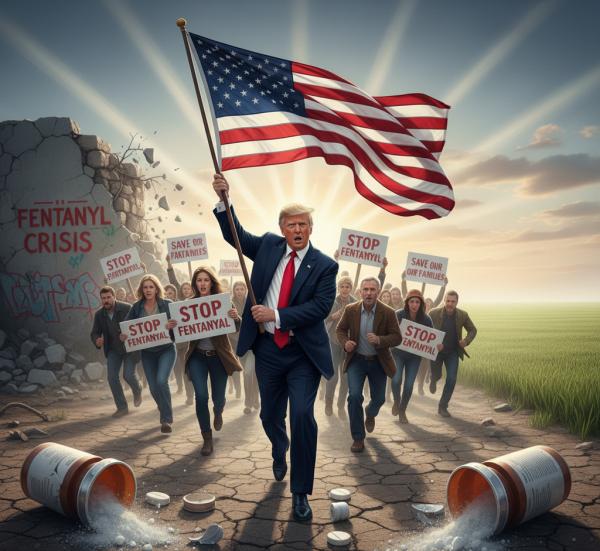
Irregular warfare, or unrestricted warfare, is a strategy designed to defeat an enemy by any means necessary. It operates outside traditional battlefields and relies on undermining a nation’s internal strength. Indeed, the defeat of America in the Vietnam War is a case in point. The real defeat wasn’t a loss of national power. It was a loss of national prowess. A drug culture, on top of "anti-imperialist" propaganda, contributed to weakening the American spirit. It was against this background that the disastrous withdrawal from Vietnam occurred in 1975. Then again, in 2021, thirteen U.S. soldiers were killed in a demoralizing retreat from Afghanistan. These two failures—Vietnam and Afghanistan—highlight a tragic erosion of American exceptionalism from within. History may not repeat, but it certainly rhymes, tragically. Donald J. Trump, understandably, has been upset by both of these failures. Lessons learned, experiences earned. No wonder Trump’s response to the opioid crises underscored his commitment to restoring America’s strength and national resolve. The lessons of the past make it clear: anyone who seeks to weaken America from within must be held accountable, especially those who have played a role in diminishing his beloved country’s power. Weaponization of Drugs A key part of this modern-day conflict is China’s strategic misuse of drugs, particularly fentanyl, as a weapon. This is not a new concept. In the 19th century, China itself was the victim of a foreign drug war, when the British, first and foremost, flooded the country with opium. The result was mass addiction, a weakened Qing dynasty, and humiliating defeats in the Opium Wars. The Treaty of Nanjing (1842) and the Treaty of Wangxia (1844) forced China to cede territory and rights to foreign powers. What was known as China’s "Century of Humiliation" began. Today, Chinese leaders are determined to reverse this historical narrative. They are no longer the victims but the aggressors, using drugs like fentanyl to weaken their perceived archenemy: America. Single-mindedly, the CCP draws the wrong lesson from the past, fixated on revenge rather than rejuvenation. Why Drugs? In 1999, two senior Chinese colonels wrote a bestseller on modern warfare, arguing that conflicts now extend beyond traditional military engagements, thus de-criminalizing cyberattacks, economic manipulation, fake news, and, notably, drug trafficking. The goal is to destabilize a nation from within, creating social chaos and diminishing its global standing. Opiods/narcotics like fentanyl are particularly effective because: • They’re cheap and easy to produce: Fentanyl can be synthesized in labs, removing the need for traditional drug-growing infrastructure. • They’re extremely potent: A small amount can be fatal, making it deadly even for those unaware of consuming it. • They’re highly addictive: Fentanyl is more addictive than heroin, which makes it much harder for individuals to break free once exposed to the dangerous drug. As of 2020, China was the leading source of fentanyl and its precursors. Mexican cartels often play a key role in smuggling the drug into the United States, but the origin of the chemicals almost always traces back to China. Fentanyl : A Security Threat The fentanyl epidemic in the United States is devastating. More than 100,000 Americans die each year from drug overdoses, with fentanyl accounting for the majority of these deaths. That’s more than the total number of U.S. soldiers lost in the entire Vietnam War. While China denies direct responsibility, claiming that "rogue" companies are at fault, this is highly questionable. The Chinese government tightly controls its industries, and many experts believe Beijing either directly facilitates the fentanyl trade or turns a blind eye to its effects. In either case, China benefits from a weakened America. This strategy works because China doesn’t operate alone. It relies on a web of international criminal organizations such as Mexican cartels, U.S.-based gangs, and Chinese criminal networks. Each of them plays a key role in the production, distribution, and laundering of drug profits. This layered system allows Beijing plausible deniability: while China isn’t directly involved in every step, the outcome still serves its geopolitical interests. Fentanyl is not just a public health crisis; it’s a national security threat. The drug epidemic: • Weakens the workforce: Every overdose death means fewer workers, fewer innovators, and fewer potential soldiers. • Drains resources: Billions of dollars are spent every year on law enforcement, healthcare, and social services to fight the crisis. • Divides society: Addiction destroys families and erodes trust in the government. • Distracts leadership: Time and energy spent battling the opioid crisis detracts from America’s ability to focus on long-term strategic challenges—particularly in its competition with China. Fentanyl doesn’t just kill individuals; it also saps the vitality of an entire nation. A Call to Action To persecute this shadowy global war, the United States must adopt a holistic approach. It cannot rely on law enforcement alone. The solution requires action at every level of society: • Cut off supply: Work with allies to clamp down on China’s chemical exports and disrupt cartel operations. • Follow the money: Target the global financial networks that facilitate the drug trade. • Build resilience: Invest in education, prevention, and recovery programs to reduce addiction rates. • Expose the truth: Make it clear to the world that the fentanyl crisis is not just a public health issue—it’s a covert form of warfare. Leadership matters most Just as China eventually recovered from its "Century of Humiliation," the United States can rise above today’s challenges. But victory will require unity, resilience, and the acknowledgment that this is not just a drug problem—it’s a national security crisis. President Trump understands the gravity of the situation. He is ready to take bold action to address the fentanyl crisis, and his leadership could be the key to ensuring that America doesn’t lose this war. After all, the stakes are too high to afford another retreat, another defeat. Author: renqiulan |
|
|
 |
 |
| 實用資訊 | |
|
|
| 一周點擊熱帖 | 更多>> |
| 一周回復熱帖 |
| 歷史上的今天:回復熱帖 |
| 2024: | 打得一拳開 – 解構中國東風31AG洲際導 | |
| 2024: | “哇,老梁,你就唔抵啦,住嘀咁嘅屋。 | |
| 2023: | 愛荷華集會熱火朝天.川普美國.世界和平 | |
| 2023: | 川鼓聲聲震寰宇.希拉里通俄門陰魂不散. | |
| 2022: | 負分題:圖中間這個白髮老頭那麼有興趣 | |
| 2022: | 轉貼 裝甲熊 鏖戰紅利曼 | |
| 2021: | 習近平的權力繼承或終結之謎 | |
| 2021: | 台積電會先被誰弄死,大陸還是美國? | |
| 2020: | 川普染疫,鬥志昂揚不減絲毫,早日康復 | |
| 2020: | 默克爾也翻臉了 | |
