



| Why hydroxychloroquine dumped in the West |
| 送交者: 风潇潇 2020年05月31日15:45:59 于 [健康生活] 发送悄悄话 |
|
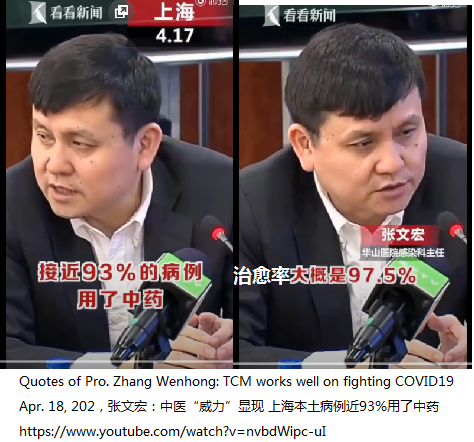
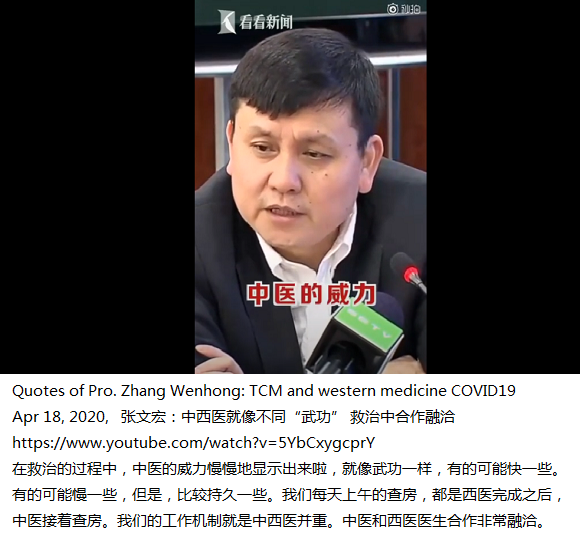
Why hydroxychloroquine dumped in the West, but takes as magic in China Frank May 15, 2020, in Waterloo, Ontario http://www.kwcg.ca/bbs/home.php?mod=space&uid=61910&do=blog&id=13736 An important note: 1.. The serum of the recovered patients is ineffective for treating patients in COVID-19. In Shanghai, China, for some patients whose virus cannot be eliminated, doctors treated by the serum of the cured person and some of the patients did turn negative, but they regained positive after three days. 2.. Need to learn the effect of hydroxychloroquine whether it is immunosuppressant or anti-virus 26 May 2020, a report from China Ruxolitinib in treatment of severe coronavirus disease 2019 (COVID-19 said that ruxolitinib recipients had a numerically faster clinical improvement with significant chest CT improvement, a faster recovery from lymphopenia and favorable side-effect profile. There were reports that immunosuppressant effect of Ruxolitinib caused infections on several organs. But in this study, it effectively cured patents in Covid-19; which inspires us to learn the effect of hydroxychloroquine whether it is immunosuppressant or anti-virus. <<<<<<>>>>>><><><><><><><<<<<<>>>>>> The clinical cases in many countries proved that the effect of hydroxychloroquine is negative than positive in the treatment of COVID-19 patients with killing more lives. Therefore WHO has paused the trial of hydroxychloroquine that listed as one of four medications in SOLIDARITY trial. But in China, the clinical cases show that the effect of hydroxychloroquine is more positive than negative in the treatment of COVID-19 patients with saved more lives. The radical different results from the use of same hydroxychloroquine stemmed from the radical difference in the medical guidance - philosophy. In western countries, the medical philosophy is Reductionism that regards human body as a mechanical assembly of inanimate parts, in attempts to reveal the mechanism of life and disease with infinitely subdivided human body as micro-units as protein or genes. The treatment is in focusing on looking for killing with ignoring the fact that it is psychological factors in decisively affecting the development of diseases. Reductionism dogmatically tempts people addicted into so called scientific to have made simple issue too complicated to deal with. It poisoned people rejecting experience based medications, while makes all efforts to prove those drugs made by scientific way as worse than good. In China, the medical philosophy is the combination of Reductionism and Daoism of Traditional Chinese Medicine – TCM; which regards human body as organic whole with all organs mutually influencing of each other. The treatment is in focusing on restoring physical balance with emphasizes that psychological factors is in decisively affecting the development of diseases and the treatment is seven tenths in psychotherapy only tree tenths in medication. In China, the most of doctors never use hydroxychloroquine in single or simply combined with other synthetic drugs; but follows Daoism to carefully restore the physical condition of patients by multi-integrated medications, especially by combining the assistant of the TCM, thereby ensure the lives of patients, and then use hydroxychloroquine in safe dosage. The compound prescription is the unique therapeutic method of TCM, which is to put many different natural medicinals together as one dose in targeting on different symptoms. Studies have proved that medicinals in compound use are able to generate synergy effect of multiplied increase of the positive effect of each other and multiplied decrease of the side effect. The Phytomedicine Research in Germany reports that, in Germany since 1980, more than 300 clinical studies have been carried out with standardized phytopharmaceuticals and gotten promising results, in many cases, the overall pharmacologic effects and therapeutic efficacies derived not from a single compound but from several compounds generating additive or synergistic pharmacologic effects with the advantage of being devoid of any adverse effects. Nov 22, 2013, article Plant Nutrient 'Cocktail' Kills Breast Cancer Cells reports that “researchers at Louisiana State University tested six known protective chemical nutrients from turmeric, soybeans, broccoli, grapes and tea. Individually, they were ineffective against cancer. But combined, they suppressed breast cancer cell growth in the lab by more than 80 percent, and eventually triggered the process leading to cell death.” Sep. 30, 2019, a study reported that triple commonly used drugs combination has extended the lifespan of fruit flies by 48%. The researchers found that lithium, trametinib and rapamycin, each of them can extend the lifespan of the fruit flies by an average of 11%, but increased around 30% by two combined, and reached 48% by three combined. The findings suggest that combined use of medicinals will produce magic curative effect and which proved the studies of Germany, the combined botanical can produce synergistic effects while reduces side effects; and which is the reason that hydroxychloroquine takes as magic in China. Contents 1.. The initiation of the arguments about the use of hydroxychloroquine 2.. The reports of opposition on the use of the hydroxychloroquine 2.1.. France: Hydroxychloroquine should not use in patients who require oxygen 2.2.. China: Hydroxychloroquine did not result in positive but negative for mild to moderate covid-19 2.3.. Frencce stops use of Hydroxychloroquine for the treatment for COVID-19 2.4.. FDA issues hydroxychloroquine warning as studies show risk in using drug for COVID-19 2.5.. Health Canada issues warning against use of hydroxychloroquine for COVID-19 3.. China, the use of hydroxychloroquine is combined with TCM 3.1.. Relieve fear psychology, improve sleep, immunity and physical strength 3.2.. The process of understanding for the effect of hydroxychloroquine 3.3.. The stop use of glucocorticoids and antibacterial drugs 3.4.. The gamma globulin is ineffective, thymosin has somewhat effect 3.5.. The serum of the recovered patients is ineffective for treating patient 3.6.. The standard for patients discharge and nucleic acid test 3.7.. The medical experts of China in western medicine reject the use of TCM 3.8.. The use of TCM in the treatment of COVID-19 patients in Shanghai, China 3.8.1.. Chinese medicine has no strong side effect were observed in treated patients 3.8.2.. There is about 93% of local patients used Chinese medicine in cure rate of 97.5% 3.8.3.. The doctors put equal emphasis on Chinese medicine and Western medicine
1.. The initiation of the arguments about the use of hydroxychloroquine According to available information, especially the attacking target, the arguments on the use of hydroxychloroquine may be triggered by the researches that led by French infectious disease expert Professor Didier Raoult, which proved that hydroxychloroquine is an effective treatment to cure COVID-19 patients in decreasing the virus carriage duration. 1.1.. March 17, 2020, Hydroxychloroquine and azithromycin as a treatment of COVID-19: results of an openlabel non-randomized clinical trial. International Journal of Antimicrobial Agents – In Press 17 March 2020 – DOI : 10.1016/j.ijantimicag. 2020. 105949 https://www.ncbi.nlm.nih.gov/pubmed/32205204 Abstract BACKGROUND: Chloroquine and hydroxychloroquine have been found to be efficient on SARS-CoV-2, and reported to be efficient in Chinese COV-19 patients. We evaluate the role of hydroxychloroquine on respiratory viral loads. PATIENTS AND METHODS: French Confirmed COVID-19 patients were included in a single arm protocol from early March to March 16th, to receive 600mg of hydroxychloroquine daily (200 mg, 3 times/day) and their viral load in nasopharyngeal swabs was tested daily in a hospital setting. Depending on their clinical presentation, azithromycin was added to the treatment. Untreated patients from another center and cases refusing the protocol were included as negative controls. Presence and absence of virus at Day6-post inclusion was considered the end point. RESULTS: Six patients were asymptomatic, 22 had upper respiratory tract infection symptoms and eight had lower respiratory tract infection symptoms. Twenty cases were treated in this study and showed a significant reduction of the viral carriage at D6-post inclusion compared to controls, and much lower average carrying duration than reported of untreated patients in the literature. Azithromycin added to hydroxychloroquine was significantly more efficient for virus elimination. CONCLUSION: Despite its small sample size our survey shows that hydroxychloroquine treatment is significantly associated with viral load reduction/disappearance in COVID-19 patients and its effect is reinforced by azithromycin. Percentage of patients with PCR-positive nasopharyngeal samples from inclusion to day6 post-inclusion in COVID-19 patients treated with hydroxychloroquine only, in COVID-19 patients treated with hydroxychloroquine and azithomycin combination, and in COVID-19 control patients.
1.2.. Apr. 11, 2020, the researchers from France public article Clinical and microbiological effect of a combination of hydroxychloroquine and azithromycin in 80 COVID-19 patients with at least a six-day follow up: A pilot observational study indicates that “We need an effective treatment to cure COVID-19 patients and to decrease virus carriage duration.” The treatment was based on the carefully reviewed the experiences of China. “Patients with no contraindications (Supplementary document) were offered a combination of 200 mg of oral hydroxychloroquine sulfate, three times per day for ten days combined with azithromycin (500 mg on D1 followed by 250 mg per day for the next four days). For patients with pneumonia and NEWS score≥5, a broad spectrum antibiotic (ceftriaxone) was added to hydroxychloroquine and azithromycin.” Set up experts and monitors to monitor patients for stopping treatment timely. “Twelve-lead electrocardiograms (ECG) were performed on each patient before treatment and two days after treatment began. All ECGs were reviewed by senior cardiologists. The treatment was either not started or discontinued when the QTc (Bazett's formula) was >500 ms.” “The risk benefit ratio of hydroxychloroquine and azithromycin combination was estimated by the infectologist and agreed with the cardiologist when the QTc was between 460 and 500 ms.” “The treatment was not started when the ECG showed patterns suggesting a channelopathy (i.e. lonq QT pattern, Brugada pattern, malignant early repolarisation pattern) and the risk-benefit ratio was discussed when it showed other significant abnormalities (i.e., pathological Q waves, left ventricular hypertrophy, left bundle branch block).” “In addition, any drug potentially prolonging the QT interval was discontinued during treatment. Symptomatic treatments, including oxygen, were added when needed. An ionogram and verification of serum potassium levels in particular, was systematically performed upon admission. When needed, standard blood chemistry was checked.” Results “80 relatively mildly infected inpatients treated with a combination of hydroxychloroquine and azithromycin over a period of at least three days. A rapid fall of nasopharyngeal viral load was noted, with 83% negative at Day7, and 93% at Day8. Virus cultures from patient respiratory samples were negative in 97.5% of patients at Day5. Consequently patients were able to be rapidly discharged from IDU with a mean length of stay of five days.” Obviously, the work of Professor Didier Raoult and he led team has achieved their goal: We need an effective treatment to cure COVID-19 patients and to decrease virus carriage duration. This work has lightened the dark nightmare of so many people being killing by virus helplessly. However, it is not get appreciation to inspire more people to consider how to properly use of the effective medication, but it triggered many people into manic state to work hardly to prove the Professor Didier Raoult is a liars. Even, some people wrote for personal attacking. 2.. The reports of opposition on the use of the hydroxychloroquine 2.1.. France: Hydroxychloroquine should not use in patients who require oxygen May 14, 2020, Department of Internal Medicine, Henri-Mondor Hospital, Assistance Publique-Hôpitaux de Paris, Paris-Est Créteil University,, Clinical efficacy of hydroxychloroquine in patients with covid-19 pneumonia who require oxygen: observational comparative study using routine care data 181 patients aged 18-80 years with documented severe acute respiratory syndrome coronavirus 2 (SARS-CoV-2) pneumonia who required oxygen but not intensive care; 84 patients who received hydroxychloroquine at 600 mg/day within 48 hours of admission to hospital (treatment group) were compared with 89 patients who did not receive hydroxychloroquine (control group). Eight additional patients received hydroxychloroquine at 600 mg/day more than 48 hours after admission. In the weighted analyses, the survival rate without transfer to the intensive care unit at day 21 was 76% in the treatment group and 75% in the control group (weighted hazard ratio 0.9, 95% confidence interval 0.4 to 2.1). Overall survival at day 21 was 89% in the treatment group and 91% in the control group (1.2, 0.4 to 3.3). Survival without acute respiratory distress syndrome at day 21 was 69% in the treatment group compared with 74% in the control group (1.3, 0.7 to 2.6). At day 21, 82% of patients in the treatment group had been weaned from oxygen compared with 76% in the control group (weighted risk ratio 1.1, 95% confidence interval 0.9 to 1.3). Eight patients in the treatment group (10%) experienced electrocardiographic modifications that required discontinuation of treatment. Conclusions: Hydroxychloroquine has received worldwide attention as a potential treatment for covid-19 because of positive results from small studies. However, the results of this study do not support its use in patients admitted to hospital with covid-19 who require oxygen. May 17, 2020, I email to author to ask about how the Hydroxychloroquine administrated to the patients in detailed dosage and times in daily base; and the concern for the distribution. In comparison with that of led by Professor Didier Raoult in Hydroxychloroquine 200mg, 3 times per day, this report did not mention the amount of dosage in single time; which is vital important. Small dose in more times administration may be more positive and less negative. 2.2.. China: Hydroxychloroquine was no positive but negative for mild to moderate covid-19 May 14, 2020, Department of Pulmonary and Critical Care Medicine, Ruijin Hospital, Shanghai Jiao Tong University School of Medicine, Shanghai, China, Hydroxychloroquine in patients with mainly mild to moderate coronavirus disease 2019: open label, randomised controlled trial. 150 patients admitted to hospital with laboratory confirmed covid-19 were included in the intention to treat analysis (75 patients assigned to hydroxychloroquine plus standard of care, 75 to standard of care alone). Patients in the treatment group were given hydroxychloroquine within 24 hours after randomisation, with a loading dose of 1200 mg daily for three days followed by a maintenance dose of 800 mg daily for the remaining days (total treatment duration was two weeks for patients with mild to moderate disease and three weeks for those with severe disease). The probability of negative conversion by 28 days in the standard of care plus hydroxychloroquine group was 85.4% (95% confidence interval 73.8% to 93.8%), similar to that in the standard of care group (81.3%, 71.2% to 89.6%). The difference between groups was 4.1% (95% confidence interval –10.3% to 18.5%). In the safety population, adverse events were recorded in 7/80 (9%) hydroxychloroquine non-recipients and in 21/70 (30%) hydroxychloroquine recipients. The most common adverse event in the hydroxychloroquine recipients was diarrhoea, reported in 7/70 (10%) patients. Two hydroxychloroquine recipients reported serious adverse events. Conclusions Administration of hydroxychloroquine did not result in a significantly higher probability of negative conversion than standard of care alone in patients admitted to hospital with mainly persistent mild to moderate covid-19. Adverse events were higher in hydroxychloroquine recipients than in non-recipients. May 17, 2020, I email to author to ask about how the Hydroxychloroquine administrated to the patients in detailed dosage and times; and concern for the distribution. As same as above report of France, this report did not mention the amount of dosage in single time also. 2.3.. Frencce stops use of Hydroxychloroquine for the treatment for COVID-19 April 8, 2020, French Hospital Stops Hydroxychloroquine Treatment for COVID-19 Patient Over Major Cardiac Risk Ahospital in France has had to stop an experimental treatment using hydroxychloroquine on at least one coronavirus patient after it became a "major risk" to their cardiac health. Professor émile Ferrari, the head of the cardiology department at the Pasteur hospital in Nice, said the side effects had already been identified, with some patients having to stop treatment because of the risk posed. April 14, 2020, French Drug-Surveillance Specialist Highlights Hydroxychloroquine Risks Government monitoring authorities in France have seen a jump in reports of serious side effects from hydroxychloroquine used to treat patients with Covid-19. Since March 27, the center in charge of tracking hydroxychloroquine has received notifications about 54 Covid-19 patients who developed serious heart problems while taking the drug. Four died. I did find the detailed treatments that can show the doctors in carefully avoiding patients from death. 2.4.. FDA issues hydroxychloroquine warning as studies show risk in using drug for COVID-19 APRIL 24, 2020, FDA issues hydroxychloroquine warning as studies show risk in using drug for COVID-19: Hydroxychloroquine and chloroquine have not been shown to be safe and effective for treating or preventing COVID-19, it caused serious heart-related adverse events and death. Its side effects range from mild — such as dizziness, nausea and diarrhea — to severe — including sensitivity to light, bleeding, muscle weakness, hair loss and convulsions. 2.5.. Health Canada issues warning against use of hydroxychloroquine for COVID-19 April 26, 2020, Health Canada issues warning against use of hydroxychloroquine for COVID-19: Health Canada is warning the public of the possible side effects of a chloroquine and hydroxychloroquine, because they can lead to dizziness, fainting, seizures, liver or kidney problems, and a potentially fatal irregular heart rate. Chloroquine and hydroxychloroquine are approved in Canada to treat malaria, lupus and rheumatoid arthritis, but are not approved medications for COVID-19, though both are currently under clinical trial. To date, data from clinical trials are limited, and the results have not conclusively shown that any specific medications are effective against COVID-19. 3.. China, the use of hydroxychloroquine is combined with other medications Firstly, we need to learn the initiation of the use of Traditional Chinese medicine – TCM in the treatment of COVID-19. Zhang Boli, 72, an academician of the Chinese Academy of Engineering, and the principal of Tianjin University of Traditional Chinese Medicine, in Jan. 27, 2020, he arrived Wuhan city for epidemic control on call of the central government of China. Below is his photo from a TV interview. In the interview, he introduces some details of TCM used in the treatment of COVID-19 patents. When talking about the hard situation in hospitals when he just arrives in Wuhan, he is still tearful in two months later.
|


|
|
 |
 |
| 实用资讯 | |
|
|
| 一周点击热帖 | 更多>> |
| 一周回复热帖 |
| 历史上的今天:回复热帖 |
| 2018: | 新的癌症治疗方法有望使癌ಭ | |
| 2018: | “世界 蝷憿芋G吸伤害心脏 | |
| 2017: | 孕妇失眠吃啥好? | |
| 2017: | 山药玉米粒炒鸡丁 | |
| 2015: | 美国公布十大健康谣言 | |
| 2015: | 小习惯成就大健康 | |
