



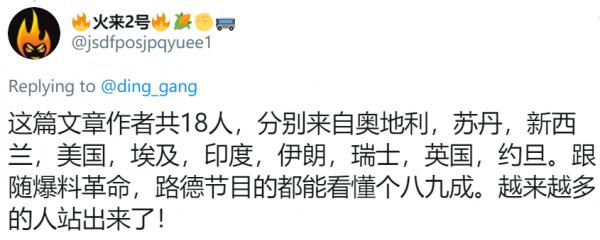
| 10国18科学家终于发声病毒来自人工合成 |
| 送交者: Pascal 2020年09月06日00:14:24 于 [五 味 斋] 发送悄悄话 |
|
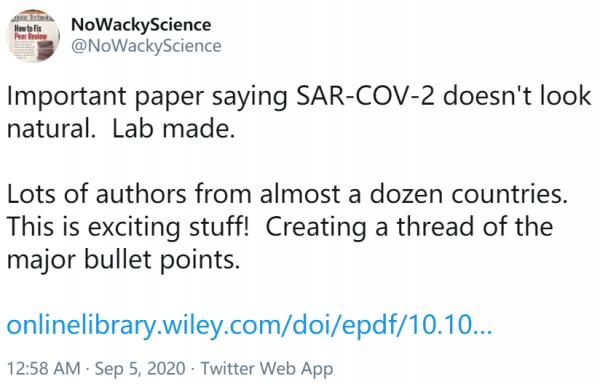
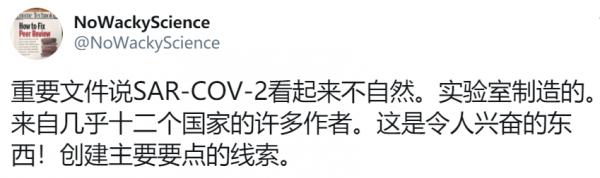
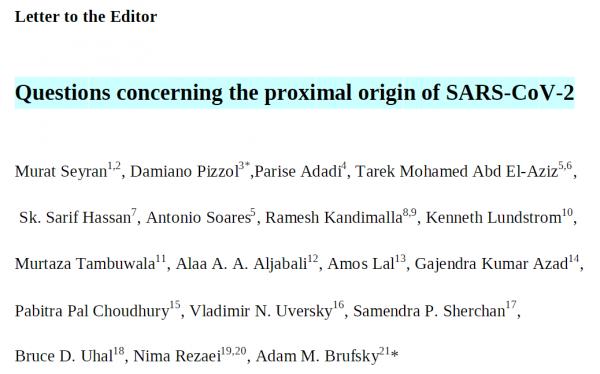
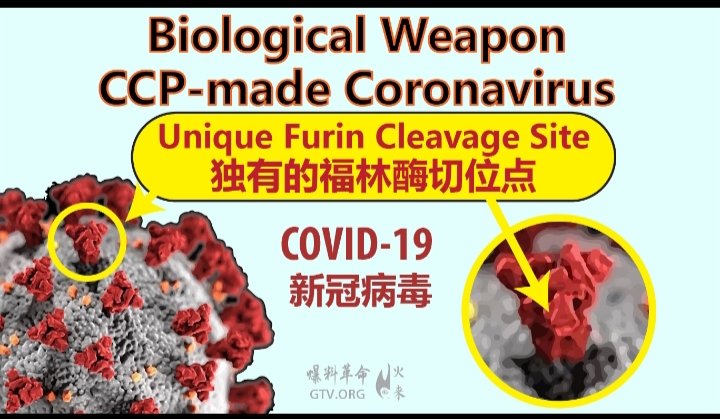
Summary: There is a consensus that Severe Acute Respiratory Syndrome Coronavirus 2 (SARS-CoV-2) originated naturally from Bat coronaviruses (CoVs), in particular RaTG13. However, the SARS-CoV-2 host tropism/adaptation pattern has significant discrepancies compared to other CoVs, raising questions concerning the proximal origin of SARS-CoV-2. The flat and non-sunken surface of the sialic acid-binding domain of SARS-CoV-2 spike protein (S protein) conflicts with the general adaptation and survival pattern observed for all other CoVs. Unlike RaTG13, SARS-CoV-2 recombination presumably occurred between the S1/S2 domains of S protein enabling host furin protease utilization. Although millions of recorded cases have been recorded globally, SARS-CoV-2 S protein does not have any apparent further recombination, placing it in conflict with the recombination models of other CoVs. Similarly, the S protein receptor-binding domain (RBD) of SARS-CoV-2 has not accumulated high-frequency non-synonymous substitutions, differentiating SARS-CoV-2 from other CoVs that have positive selection/adaptation mutations in their RBDs.
摘要:有一个共识,即严重急性呼吸系统综合症冠状病毒2(SARS-CoV-2)自然起源于蝙蝠冠状病毒(CoV),尤其是RaTG13。然而,与其他CoV相比,SARS-CoV-2宿主的向性/适应性模式存在显着差异,这引发了有关SARS-CoV-2的近端起源的问题。 SARS-CoV-2穗蛋白(S蛋白)的唾液酸结合结构域的平坦且不凹陷的表面与所有其他CoV所观察到的一般适应性和存活模式相冲突。与RaTG13不同,SARS-CoV-2重组可能发生在S蛋白的S1 / S2结构域之间,从而可以利用宿主弗林蛋白酶。尽管全球已记录了数百万例已记录病例,但SARS-CoV-2 S蛋白没有任何明显的进一步重组,使其与其他CoV的重组模型相冲突。同样,SARS-CoV-2的S蛋白受体结合域(RBD)并未积累高频非同义取代,从而使SARS-CoV-2与其他在其RBD中具有正选择/适应突变的CoV区别开来。
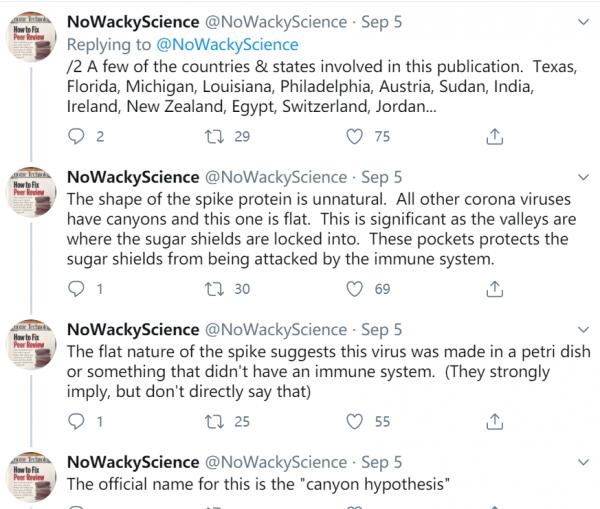
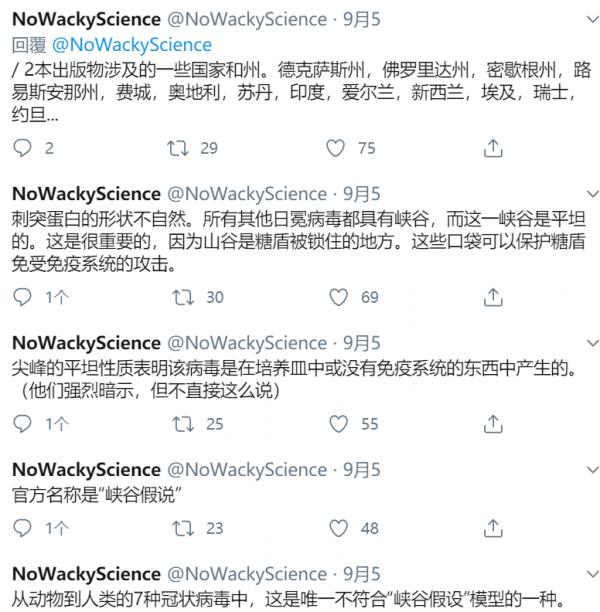
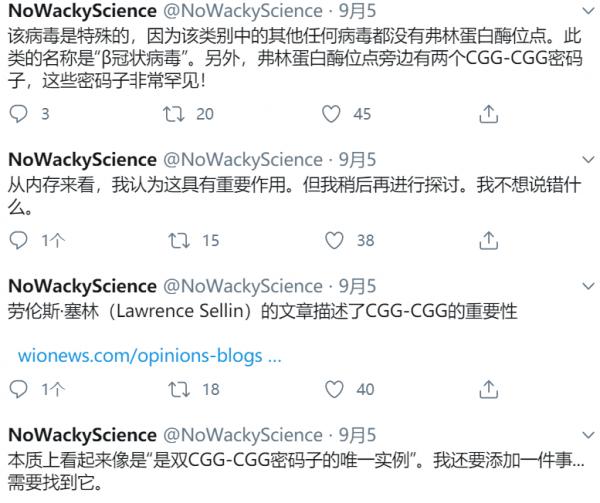
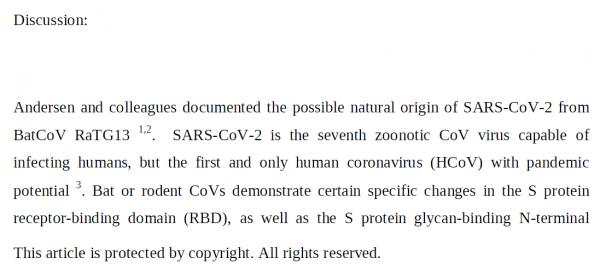
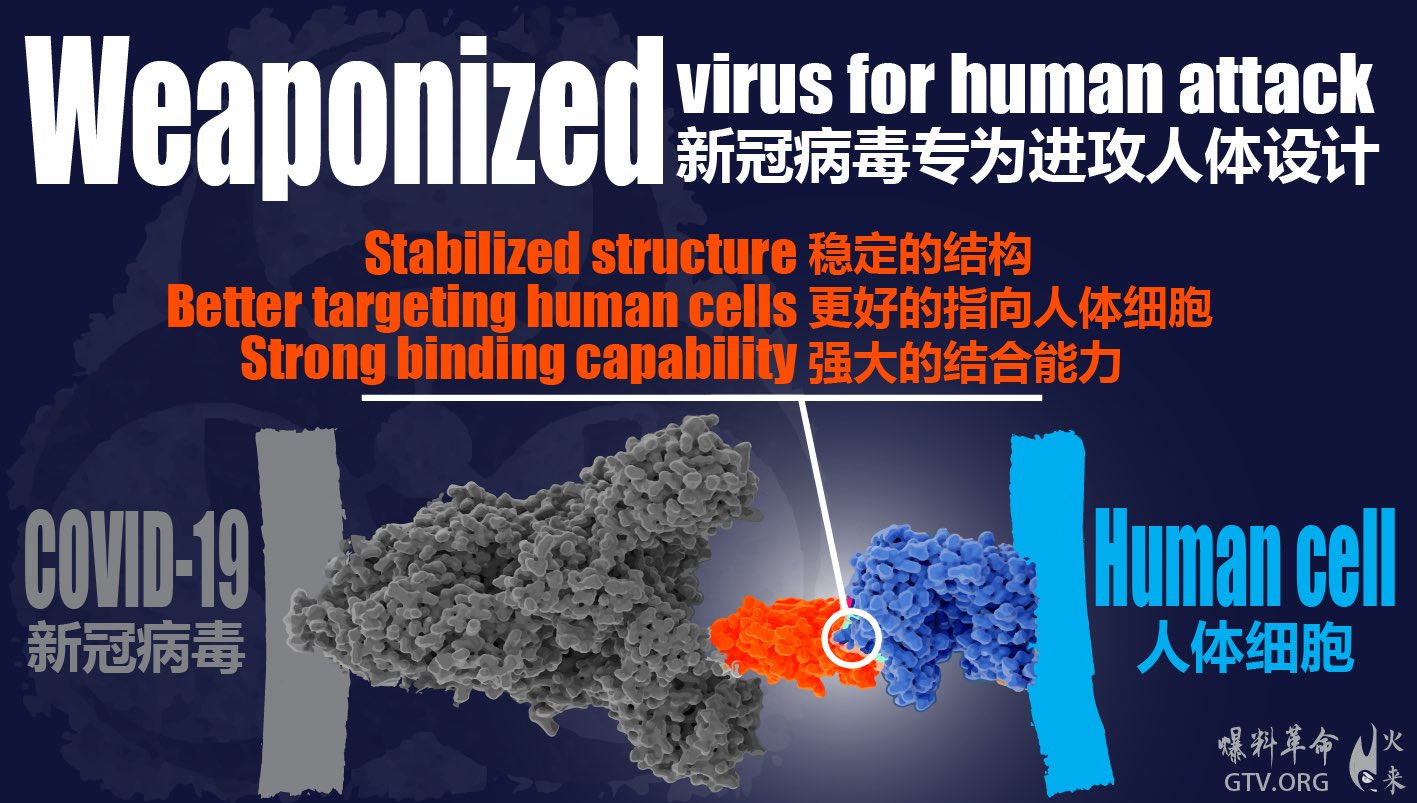
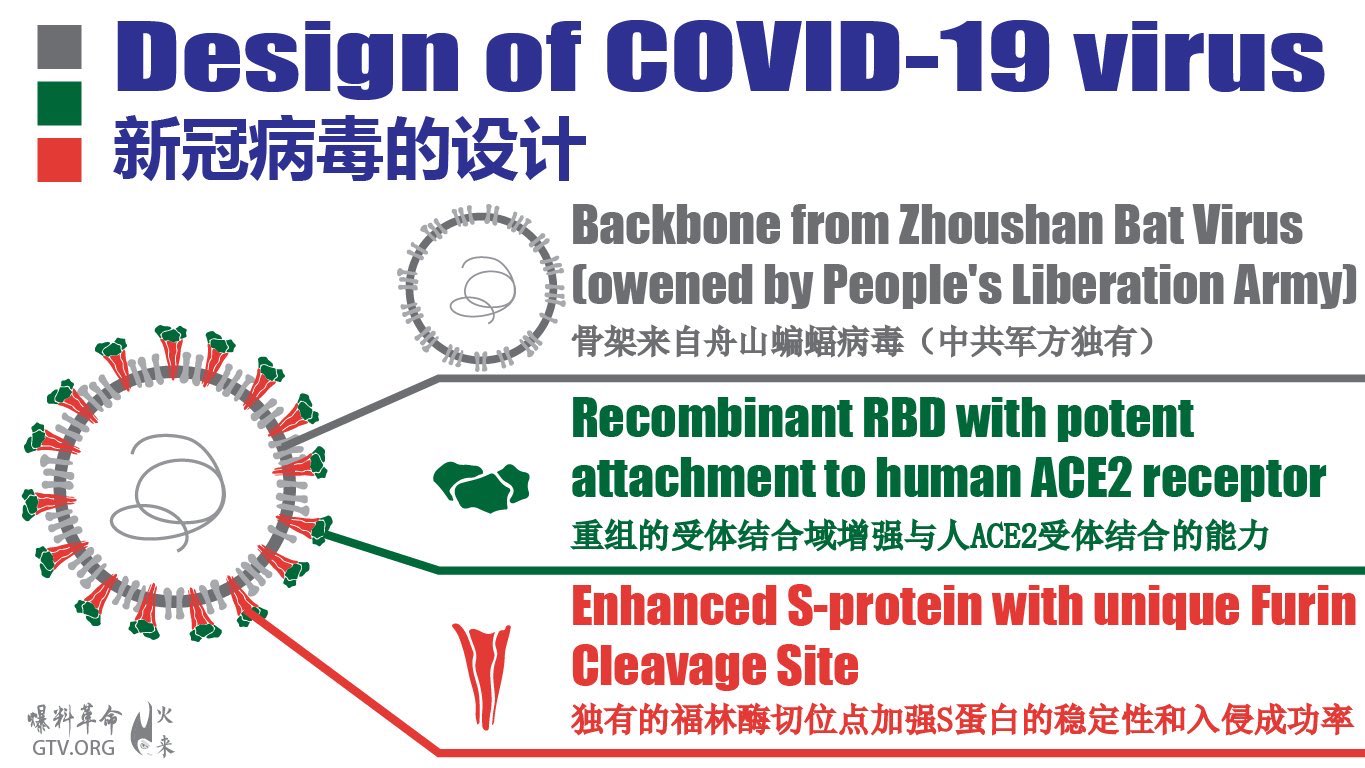
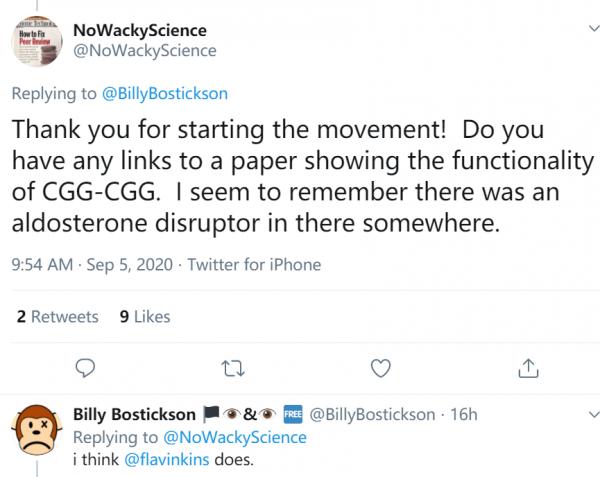
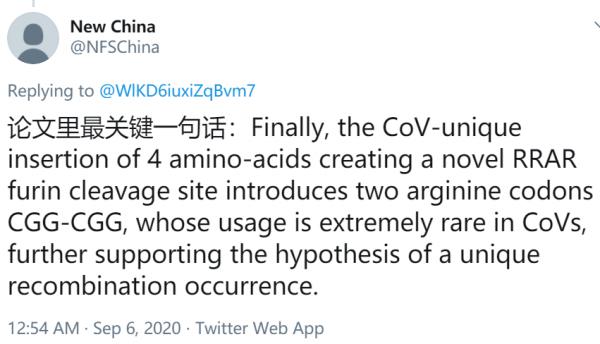
Andersen及其同事记录了来自BatCoV RaTG13 1,2的SARS-CoV-2的天然来源。 SARS-CoV-2是能够感染人类的第七种人畜共患冠状病毒,但也是第一种也是唯一具有大流行潜力的人冠状病毒(HCoV)。蝙蝠或啮齿动物CoV表现出S蛋白受体结合域(RBD)的某些特定变化 以及S蛋白聚糖结合的N端 during host tropism/adaptation 4,5. SARS-CoV-2, unlike other CoVs, does not have those signature changes, suggesting that these RBD and NTD subdomains are of very recent origin. The "Canyon Hypothesis" explains the development of canyons, depression zones or cavities on the surfaces of influenza virus, human rhinovirus, and Meningo viruses 6. In CoVs (except SARS-CoV-2), the S protein NTD domain has several predicted glycan-binding domains, with a common feature being the hidden localization of these glycan binding domains to cavities to limit their access to antibodies and immune cells 5. This pattern of CoVs is thought to be an evolutionary measure to restrict the recognition of these active sites by host immune system 4. HCoVs can evade detection by host glycan-binding immune receptors. Comparative genomic analysis of six HCoVs with their corresponding native bat or rodent CoVs suggests compatibility with the "Canyon Hypothesis" resulting from various adaptive S protein NTD non-synonymous mutations near or at the glycan binding domain which are predicted to result in these NTD domains being hidden below the protein surface5. The predicted flat, non-sunken pattern of the SARS-CoV-2 S protein NTD glycan binding domains conflicts with this evolutionary host tropism/adaptation strategy 7. A template-switching mechanism is presumably responsible for the high rate of RNA recombination in CoVs. In host cells, CoV RNAs show discontinuous RNA synthesis materialized by pauses of the RNA-dependent complex and subsequent jumps to downstream template acceptor sequences. This process results in subgenomic minus strand RNAs which serve as templates for subgenomic mRNAs. Due to the mechanistic similarity to recombination, this process might be at the origin of recombinant CoVs co-opting other CoV or even host related sequences8. Instances include the mouse hepatitis coronavirus S protein NTD sialic acid binding domain, likely arising from recombination of viral RNA with human galectin RNA sequences 8 在宿主向性/适应过程4,5。与其他CoV不同,SARS-CoV-2没有这些签名更改,表明这些RBD和NTD子域是最近才起源的。 “峡谷假说”解释了流感病毒,人类鼻病毒和脑膜炎病毒表面上峡谷,凹陷区域或空腔的形成。6在冠状病毒(SARS-CoV-2除外)中,S蛋白NTD结构域具有几种预测的聚糖-结合结构域,其共同特征是这些聚糖结合结构域在腔中的隐蔽定位,以限制它们对抗体和免疫细胞的访问。5 CoV的这种模式被认为是一种进化手段,可通过以下方式限制对这些活性位点的识别宿主免疫系统4. HCoV可以逃避宿主聚糖结合免疫受体的检测。对六种HCoV及其相应的天然蝙蝠或啮齿动物CoV进行的比较基因组分析表明,与聚糖结合域附近或处的各种适应性S蛋白NTD非同义突变导致的“峡谷假说”具有相容性,预计这些突变会导致这些NTD域成为隐藏在蛋白质表面以下5。 SARS-CoV-2 S蛋白NTD聚糖结合结构域的预测的平坦,非凹陷模式与这种进化宿主的向性/适应策略7相冲突。模板转换机制可能是CoV中RNA重组率很高的原因。在宿主细胞中,CoV RNA表现出不连续的RNA合成,这是由于RNA依赖复合物的暂停以及随后跳至下游模板受体序列而实现的。该过程产生亚基因组负链RNA,其充当亚基因组mRNA的模板。由于与重组的机制相似性,该过程可能是重组CoV选择其他CoV甚至宿主相关序列的起点。实例包括小鼠肝炎冠状病毒S蛋白NTD唾液酸结合域,可能是病毒RNA与人半乳糖凝集素RNA序列重组产生的8 The furin recognition motif present at the SARS-CoV2 S1/S2 junction has no analogy in other "linage B" beta-coronaviruses, including neither pangolin-CoV nor RaTG13 1. This indicates that the S protein S1/S2 junction is not a hot spot for RNA recombination termination that depends on a pattern swapping templates (copy-choice) 8. Additionally, clinical isolates of SARS-CoV-2 S protein have not indicated any further recombination in this S1/S2 area, suggesting that the addition of a motif for S1/S2 site furin cleavage constituted a unique recombination occurrence. Finally, the CoV-unique insertion of 4 amino-acids creating a novel RRAR furin cleavage site introduces two arginine codons CGG-CGG, whose usage is extremely rare in CoVs, further supporting the hypothesis of a unique recombination occurrence. 存在于SARS-CoV2 S1 / S2连接处的弗林蛋白酶识别基序与其他“甲型B”β冠状病毒没有相似之处,包括穿山甲CoV和RaTG13 1都不存在。这表明S蛋白S1 / S2连接处不热。 RNA重组终止的位点,取决于模式交换模板(复制选择)8。此外,SARS-CoV-2 S蛋白的临床分离株未表明在该S1 / S2区域有任何进一步的重组,表明添加了一个 S1 / S2位点弗林蛋白酶裂解的基序构成独特的重组发生。 最后,通过CoV独特地插入4个氨基酸,创建了一个新的RRAR弗林蛋白酶切割位点,引入了两个精氨酸密码子CGG-CGG,它们在CoV中极少使用,进一步支持了独特重组发生的假设。 HCoVs have high-frequency “hot spots” for non-synonymous amino acid replacements that can possibly create positive selection for host tropism/adaptation, resistance to neutralizing antibodies, or immune evasion 2. Interestingly, clinical SARS-CoV-2 isolates to date have only a single high frequency non-synonymous mutation, D614G, in their S protein 9. Based on currently known mutation rates and patterns in clinical isolates of SARS-CoV-2, the S protein does not appear to be a mutational “hot spot” for SARS-CoV-2, unlike other human CoVs. SARS-CoV-2 is the seventh HCoV, but the first HCoV with pandemic potential. SARS-CoV disappeared without a pandemic, and MERS-CoV is mostly endemic to the Arabian Peninsula with some additional limited traveler infections resulting in outbreaks in South Korea 3,4. These unique features of SARS-CoV-2 raise several questions concerning the proximal origin of the virus that require further discussion. HCoV具有非同义氨基酸替代的高频“热点”,可能为宿主的嗜性/适应性,对中和抗体的抵抗力或免疫逃避2产生积极的选择。有趣的是,迄今为止,临床SARS-CoV-2分离株具有 S蛋白9中只有一个高频非同义词突变D614G。根据目前已知的SARS-CoV-2临床分离株的突变率和模式,S蛋白似乎不是突变的“热点”。 与SARS-CoV-2不同,它不同于其他人类CoV。 SARS-CoV-2是第七个HCoV,但第一个具有大流行潜力的HCoV。 SARS-CoV在没有大流行的情况下就消失了,而MERS-CoV在阿拉伯半岛是很流行的,另外还有一些有限的旅行者感染,导致了韩国的爆发3,4。 SARS-CoV-2的这些独特特征引起了有关病毒近端起源的几个问题,需要进一步讨论。 论文链接: https://onlinelibrary.wiley.com/doi/epdf/10.1002/jmv.26478
|







|
|
 |
 |
| 实用资讯 | |
|
|
| 一周点击热帖 | 更多>> |
| 一周回复热帖 |
| 历史上的今天:回复热帖 |
| 2019: | 几千年来天朝人能吃饱饭能随便吃肉也就 | |
| 2019: | 来自老大哥的明斯基,黑天鹅,背后捅刀 | |
| 2018: | 不要脸的海华为国内大老板拉皮条 | |
| 2018: | 国内的饭局的确非常恶心,聊天的口水贴 | |
| 2017: | 本来萨德部署南韩遭遇重重阻拦。不但中 | |
| 2017: | 继南韩部署萨德之后,川大总统最近又解 | |
| 2016: | 对对眼看大逆转:Trump leading Clinto | |
| 2016: | 淡紫:对比一下,我的字和老爸的字 | |
| 2015: | 香椿树:用俘虏数量推算消灭日军数量 | |
| 2015: | 东东的体型自信是不容怀疑的,很可惜没 | |
