



| 先聲奪人鎮唬你杜威打敗杜魯門當選總統 |
| 送交者: Pascal 2020年11月07日18:43:43 於 [五 味 齋] 發送悄悄話 |
|
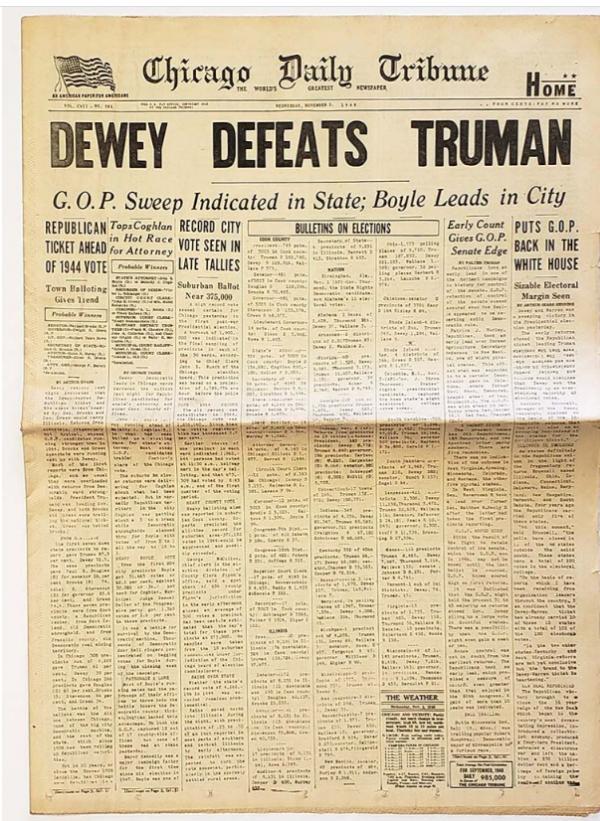
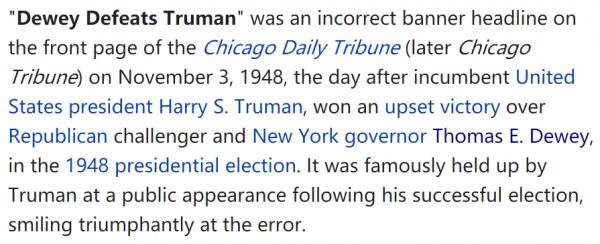
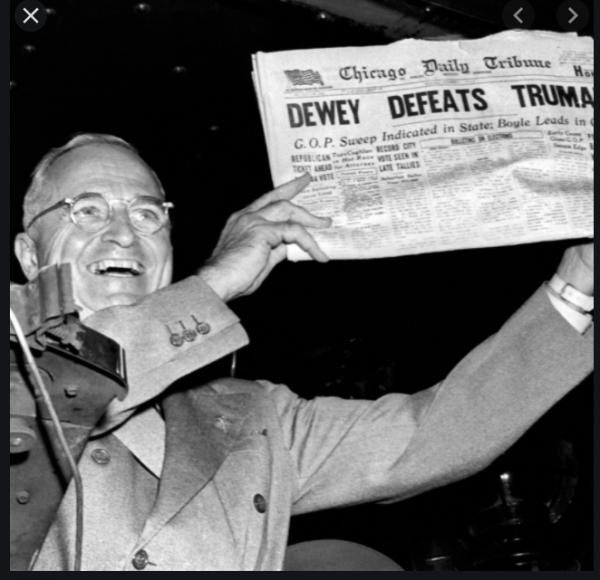
杜威打敗杜魯門當選美國總統!
1948年11月3日 1948年11月3日 1948年11月3日
文在寅同志就是這樣 上台當上韓國總統的:
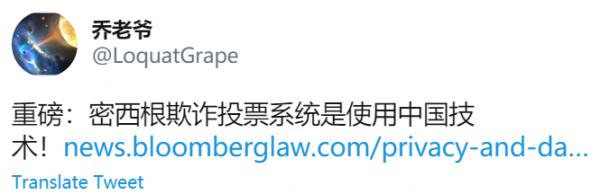
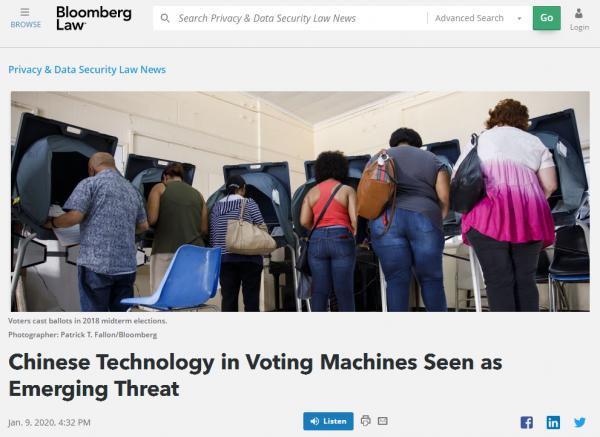
The infiltration by foreign countries like China into election voting equipment is emerging as a growing concern among vendors, who are actually asking for more federal regulation as they grapple with a lack of domestic suppliers producing critical technologies . The infiltration by foreign countries like China into election voting equipment is emerging as a growing concern among vendors, who are actually asking for more federal regulation as they grapple with a lack of domestic suppliers producing critical technologies . Top executives of the three largest voting machine vendors—Hart InterCivic, Dominion Voting Systems and Election Systems & Software—told the House Administration Committee Thursday they are hoping for guidance and support from the Department of Homeland Security on how to secure their subcontractors. Committee Chairwoman Zoe Lofgren (D-Calif.) said the hearing marked the first time all three CEOs of the largest companies supplying voting machines in the U.S. agreed under oath that they’d welcome comprehensive regulations from the federal government.
2018年選舉日,佛羅里達州多拉爾的一個投票站的投票機。 斯科特·麥金太爾/彭博 高管告訴委員會成員,由於缺乏美國製造的同類產品,他們別無選擇,只能依靠中國的部件,這是包括5G電信和無人機在內的其他技術產品的開發商所面臨的問題。 “你明白為什麼這關繫到我們所有人嗎?” 排名成員羅德尼·戴維斯(Rodney Davis) (R-Ill。)問。 “絕對”,來自三個製造商的小組成員幾乎一致地回答。 Hart InterCivic的朱莉·馬蒂斯(Julie Mathis)表示,儘管如此,全球技術供應鏈在美國生產零件的方式上仍將發生“巨大變化”。 Dominion首席執行官約翰·普洛斯(John Poulos)還表示,他正在尋求將供應鏈指南寫入美國選舉援助委員會(Election Assistance Commission)正在開發的投票機新自願標準中。EAC專員也作證,這些標準應在未來幾個月內發布。 國土安全部於2018年啟動了由政府官員和私營企業組成的供應鏈工作隊,以針對技術和電信行業提出建議和最佳實踐。 高管告訴洛夫格倫,他們歡迎新的聯邦報告要求以及網絡安全實踐,網絡攻擊,人員安全和公司所有權,這是五個問題之一。洛夫格倫說她的賬單(HR 2722) 去年眾議院通過後,解決這些問題的方案在參議院陷入僵局。 戴維斯呼籲更新2002年《幫助美國投票法》 (第107-252號公法)它是為了幫助監督2000年總統大選後的投票機而創建的,旨在幫助保護諸如電子投票書和在線註冊數據庫之類的新技術。 要就此故事與記者聯繫: 邁克爾·羅斯在華盛頓mross@bgov.com 與負責此故事的編輯聯繫: 保羅·亨德里在phendrie@bgov.com ;羅賓·梅佐利在rmeszoly@bgov.com Top executives of the three largest voting machine vendors—Hart InterCivic, Dominion Voting Systems and Election Systems & Software—told the House Administration Committee Thursday they are hoping for guidance and support from the Department of Homeland Security on how to secure their subcontractors. Committee Chairwoman Zoe Lofgren (D-Calif.) said the hearing marked the first time all three CEOs of the largest companies supplying voting machines in the U.S. agreed under oath that they’d welcome comprehensive regulations from the federal government. The executives told committee members they have no choice but to rely on components from China due to a lack of U.S.-made equivalents, a problem facing developers of other technology products including 5G telecommunications and drones. “Do you see why that concerns all of us up here?” ranking member Rodney Davis (R-Ill.) asked. “Absolutely,” the panelists from the three manufacturers answered in near unison. Still, it would take a “sea change” in the way global technology supply chains work for the U.S. to produce the parts, Julie Mathis of Hart InterCivic said. Dominion CEO John Poulos also said he was looking for supply-chain guidance to be written into new voluntary standards for voting machines being developed by the U.S. Election Assistance Commission. Those standards should be released in the coming months, an EAC commissioner also testified. The DHS in 2018 initiated a supply-chain task force of government officials and private industry to form recommendations and best practices for technology and telecom industries. Supply-chain practices were one of five issues for which executives told Lofgren they’d welcome new federal reporting requirements, along with cybersecurity practices, cyberattacks, personnel security, and corporate ownership. Lofgren said her bill (H.R. 2722) that addressed these issues had stalled in the Senate after the House passed it last year. Davis called for updating the 2002 Help America Vote Act (Public Law 107-252)—which was created to help oversee voting machines following the 2000 presidential election—to help secure new technology like electronic polling books and online registration databases. https://news.bloomberglaw.com/privacy-and-data-security/chinese-technology-in-voting-machines-seen-as-emerging-threat
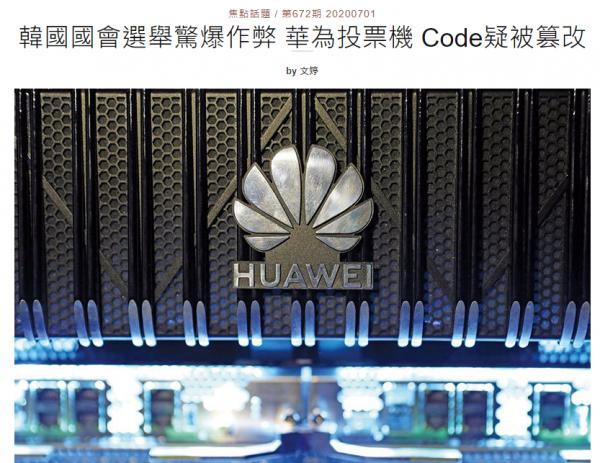
華為近日被指涉嫌操縱韓國選舉。有美媒披露,今年4月韓國國會議員選舉中使用了中國華為通信設備,疑似出現非法操縱投票機、通訊投票和提早投票的QR code作弊行為。 文:文婷 具有中共軍方背景的華為,被指涉嫌間諜活動,遭到美國封殺。近日,華為又被爆出涉嫌操縱韓國選舉的醜聞。此前,一名前中共網軍曾披露中共介入2017年韓國總統大選,助文在寅勝選的驚人內幕。 美媒:華為涉入韓國大選韓國在今年4月舉行國會議員選舉,現任總統文在寅所屬的政黨共同民主黨,獲得壓倒性的勝利。但近日,該選舉結果遭到外界質疑。 美國媒體《新聞周刊》(Newsweek)日本版6月1日報導,東亞研究中心指出,該次韓國大選中採用華為製作的「LG Yuplus 5G」投票機,可以被人為篡改,用於通訊投票和提早投票的「QR code」也有問題,暗示這次大選有可能遭中共暗中操縱。 東亞研究中心還指出,華為生產的投票伺服器可連結到中國境內,也能通過「QR code」從外部將其指令發送到主伺服器,並在中國境內噝小Ⅻ/p> 這篇報導進一步加深了外界對中共介入韓國選舉的懷疑。早在今年2月28日,曾有一名朝鮮族人以原中共網軍成員的身分,在韓國最大的搜尋平臺NAVER上發文,披露中共介入韓國總統大選的驚人內幕。 中共介入 助文在寅當選總統
這名前中共網軍、韓國Turn Right(NPO)組織成員在文章中披露,中共試圖通過與共同民主黨親中派政客合作,暗中操控韓國政府,讓韓國成為中共海外勢力的一部分。不論是韓國總統大選還是地方選舉,都有中共網軍參與其中。 中共在韓國的1000多名網軍中,大約有15%是韓國人,其他都是中國的朝鮮族人,大多數是在韓國留學的大學生。 文章稱,文在寅2017年當選是因為中共的介入,這是事實。而文在寅本身就是共產主義者,他上臺後為了回報中共,最少幫中共做了十件大事,韓國民眾卻為此付出極大代價。 這十件大事都與中共有關,包括釜山尾浦港中國製鐵建設、全羅南道光陽的中國鋁廠開工、江原道的中國街、政府核准永宗島及松島的中國投機資本進入、世宗市智慧都市的中國建設公司、中國的太陽能建設、中國產電動汽車以及政府提供給它們的補助款、4億張口罩偷偷輸出給中共、針對環保團體對中國懸浮微粒的擔憂以賄賂的方式處理、對中共肺炎(武漢肺炎)最嚴重疫區的中國入境不管制。
文章表示,中共為了掌握韓國所有的基礎產業正在伸出魔手,與韓國民主黨親中派政客合作,打算併吞韓國電力公司(KEPCO)。 文章指出,中共認為要想達到擊敗美國、掌握世界霸權的終極目的,赤化韓國是「關鍵鑰匙」,而韓國現當權者則掉入了中共設置的陷阱中。 這篇文章在韓國引起了巨大反響,但因為韓國當局施壓,該文已被NAVER平臺管理方撤下。 外界觀察發現,文在寅上臺後的確對中共政府十分遷就。2017年12月,文在寅首次訪問中國大陸,但遭到冷遇,不僅三餐都沒有中共官員作陪,中共總理李克強甚至單方面解除跟文在寅的午餐。 今年初,中共病毒疫情在韓國爆發後,超過130萬韓國民眾聯署彈劾總統文在寅,抨擊他抗疫不力,未在第一時間限制中國人入境,而且在韓國口罩緊缺之際,文在寅政府還捐贈口罩給中方。 「彈劾文在寅」的請願案發起人在請願說明中寫道:從這次中共肺炎疫情的對應措施看來,與其說文在寅是韓國總統,不如說他更像一個「中國(共)總統」。 中共操控韓國輿論 彈劾朴槿惠
上述前中共網軍在網路爆料之後,還接受了媒體採訪。他說,中共對韓國所做的輿論操控,目的是想讓韓國成為中共的一部分,好讓中共可以與美國在實力上抗衡。 他披露,一些朝鮮族中國人,之前曾祕密介入朴槿惠彈劾案,並積極協助中共咦鰨絆戫n國的選舉,讓文在寅成功當選。 他引述一位有中共背景的朝鮮族人士在韓國一家網路社區裡揭露的情況說,中共早已介入和操縱韓國的民意。85%韓國民意,可由幫助中共的朝鮮族人士引導,甚至韓國的主要網路社區也是由朝鮮族來管理的。 他說,在韓國,網路上的很多公眾評論都是朝鮮族寫的,大多數是「在韓國際生」,只有15%的公眾意見由韓國人自己表達。他認為,韓國的中國學生存在更多問題,有些學生很有錢,在韓國留學有明確的目的。 他還披露,朝鮮族之前介入朴槿惠彈劾案,本來無望,但在世越號沉沒事故發生後,朝鮮族人引導操縱大眾輿論,朴槿惠最終被彈劾。
目前,韓國輿論都受到中共影響。如韓國電信郀I商LG U+,因使用中共電信商華為公司的設備,使得韓國顧客竟無法打開中共眼中的「敏感網站」,包括dongtaiwang.com、chinese.uhrp.org、freehongkong.org等。 這位前中共網軍最後表示,很少韓國媒體願意揭露這個真相,但他認為自己生活在韓國,是一名韓國人,有義務讓韓國民眾知道真相,因此他選擇站出來揭露真相。他擔心,如果美國不採取防護措施,韓國終將成為歷史,從地圖上消失。◇ https://www.epochweekly.com/ b5/672/20825.htm
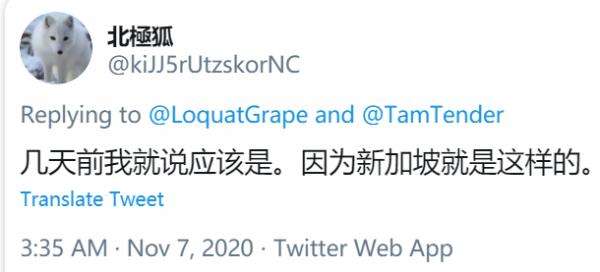
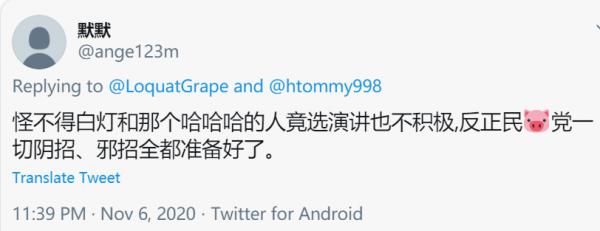
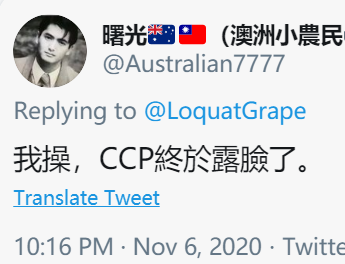
https://twitter.com/kiJJ5rUtzskorNC /status/1324993797873426433
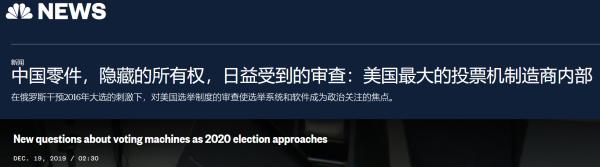
Dec. 19, 2019, 6:30 AM EST By Ben Popken, Cynthia McFadden and Kevin Monahan OMAHA, Neb. — Just off a bustling interstate near the border between Nebraska and Iowa, a 2,800-square-foot American flag flies over the squat office park that is home to Election Systems & Software LLC. The nondescript name and building match the relative anonymity of the company, more commonly known as ES&S, which has operated in obscurity for years despite its central role in U.S. elections. Nearly half of all Americans who vote in the 2020 election will use one of its devices. That’s starting to change. A new level of scrutiny of the election system, spurred by Russia’s interference in the 2016 election, has put ES&S in the political spotlight. The source of the nation’s voting machines has become an urgent issue because of real fears that hackers, whether foreign or domestic, might tamper with the mechanics of the voting system. That has led to calls for ES&S and its competitors, Denver-based Dominion Voting Systems and Austin, Texas-based Hart Intercivic, to reveal details about their ownership and the origins of the parts, some of which come from China, that make up their machines. But ES&S still faces questions about the company’s supply chain and the identities of its investors, although it has said it is entirely owned by Americans. And the results of its government penetration tests, in which authorized hackers try to break in so vulnerabilities can be identified and fixed, have yet to be revealed. The secrecy of ES&S and its competitors has pushed politicians to seek information on security, oversight, finances and ownership. This month, a group of Democratic politicians sent the private equity firms that own the major election vendors a letter asking them to disclose a range of such information, including ownership, finances and research investments. "The voting machine lobby, led by the biggest company, ES&S, believes they are above the law,” said Sen. Ron Wyden, D-Ore., a member of the Intelligence Committee who co-signed the letter. “They have not had anybody hold them accountable even on the most basic matters.” ES&S Chief Executive Tom Burt dismissed criticism as inevitable and impossible to answer, but he called for greater oversight of the national election process. “There are going to be people who have opinions from now until eternity about the security of the equipment, the bias of those companies who are producing the equipment, the bias of the election administrators who are conducting the election,” Burt said in an interview. “I can’t do anything to affect those people’s opinions.” “What the American people need is a system that can be audited, and then those audits have to happen and be demonstrated to the American public,” Burt said. “That's what will cut through the noise.” ES&S invited NBC News journalists into its headquarters, the first time it has done so for a national news organization. The walls were decorated with images of the Constitution and inspirational messages about quality control. In glass-walled rooms etched with the company’s patents, technicians tested machines under tight security. Burt, a native Nebraskan, has called for federal regulations that would require voting machine companies to address some of the key questions posed to ES&S. In June, he wrote an op-ed asking Congress for more regulation, which would include requirements for paper backups of individual votes, mandatory post-election audits and more resources for the U.S. Election Assistance Commission to speed improvements. NBC News examined publicly available online shipping records for ES&S for the past five years and found that many parts, including electronics and tablets, were made in China and the Philippines, raising concerns about technology theft or sabotage. During the tour, Burt said the overseas facilities are “very secure.” He said the final assembly of voting machines takes place in the U.S. Chinese manufacturers can be forced to cooperate with requests from Chinese intelligence officials to share any information about the technology and therefore pose a risk for U.S. companies, NBC News analyst Frank Figliuzzi, a former assistant director of the FBI for counterintelligence, said. That could include intellectual property, such as source code, materials or blueprints. There is also the concern of machines shipped with undetected vulnerabilities or backdoors that could allow tampering. In a letter to NBC News, ES&S said it takes “great care” with its foreign supply chain, including conducting risk assessments and making on-site visits to suppliers to make sure that components “are trusted, tested and free of malware.” It said that all of its facilities adhere to international standards, that it manufactures in compliance with all federal guidelines and that it follows cybersecurity best practices. The company says that its overseas manufacturing site has been successfully audited by the Election Assistance Commission and that the company conducts on-site visits of its suppliers “to ensure that components are trusted, tested and free of malware.” “Some components (such as surface mount capacitors, resistors, inductors and fixed logic devices) may be sourced from China-based manufacturers,” the letter said, referring to basic circuitry components. ES&S said it conducts quality assurance tests on the machines. Questions about who owns the major voting machine manufacturers have followed the industry for years. The issue took on greater urgency after the FBI disclosed in July 2018 that a Russian oligarch had invested in a Maryland election services firm. Officials in Maryland and North Carolina have started questioning voting machine makers about potential foreign ownership. Because it is privately owned, ES&S is not legally obligated to reveal its ownership or any other details about its finances, although Burt did confirm that the company generated about $100 million in sales last year. But in response to questions this year from the North Carolina State Board of Elections, ES&S disclosed which investors own more than 5 percent of the company. They include Burt, Chief Financial Officer Tom O’Brien and the Omaha-based private equity firm McCarthy Group, which owns a controlling interest. The letter identified two passive investors, Nancy McCarthy and Kenneth Stinson, who own stakes of more than 5 percent in McCarthy Group. ES&S said McCarthy Group’s bylaws prevented it from revealing other individual investors, but it affirmed that they are all U.S. citizens or trusts or corporations owned by Americans. The company offered to pay for an independent auditor to verify that all the investors are Americans. NBC News declined, as citizenship itself wouldn’t answer other potential questions, including political affiliations or other conflicts of interest. McCarthy Group did not respond to NBC News’ requests for comment. Virtually no laws govern the cybersecurity aspects of voting machine technologies. But ES&S points to its voluntary efforts to improve voting machine security, most notably a new program with the Energy Department’s Idaho National Labs, the same federal facility that tests the power grid and nuclear power generators. ES&S machines underwent eight weeks of vulnerability testing and penetration by government hackers. Chris Wlaschin, head of systems security for ES&S, said at a Homeland Security cybersecurity summit in Washington in September that the company’s machines are not prone to a remote attack over the internet. But he added that someone with enough time and access could make a machine “inoperative or unusable.” Although Wlaschin said the company would release an executive summary of the government testing, the company recently said it has nothing for “external release.” It said recommendations from the tests would be incorporated into “future voting system releases.” Wyden said he was concerned by the company’s foreign parts supply and was working on legislation to limit it. “What you have found is particularly important because of the China connection,” he said. Wyden is also eager to see the Idaho National Lab findings. “They’re claiming that the Department of Homeland Security has been working with them. I’m going to ask for this information on the basis of your report within 10 days,” he said. Eddie Perez, global director of technology development for the Open Source Election Technology Institute, a nonprofit election technology research group with which NBC News has partnered since 2016, said the lack of oversight is problematic. “The way people vote is managed by a couple of entities that people don’t know a lot about, and that creates risks for the country,” he said. When it comes down to the essentials, voting machine makers “behave based on the level of regulation they have,” Perez said. “They have to check the boxes,” he added. “But once they’ve done that, they focus on selling their product.” Dec. 19, 2019, 6:30 AM EST By Ben Popken, Cynthia McFadden and Kevin Monahan OMAHA, Neb. — Just off a bustling interstate near the border between Nebraska and Iowa, a 2,800-square-foot American flag flies over the squat office park that is home to Election Systems & Software LLC. The nondescript name and building match the relative anonymity of the company, more commonly known as ES&S, which has operated in obscurity for years despite its central role in U.S. elections. Nearly half of all Americans who vote in the 2020 election will use one of its devices. That’s starting to change. A new level of scrutiny of the election system, spurred by Russia’s interference in the 2016 election, has put ES&S in the political spotlight. The source of the nation’s voting machines has become an urgent issue because of real fears that hackers, whether foreign or domestic, might tamper with the mechanics of the voting system. That has led to calls for ES&S and its competitors, Denver-based Dominion Voting Systems and Austin, Texas-based Hart Intercivic, to reveal details about their ownership and the origins of the parts, some of which come from China, that make up their machines. But ES&S still faces questions about the company’s supply chain and the identities of its investors, although it has said it is entirely owned by Americans. And the results of its government penetration tests, in which authorized hackers try to break in so vulnerabilities can be identified and fixed, have yet to be revealed. The secrecy of ES&S and its competitors has pushed politicians to seek information on security, oversight, finances and ownership. This month, a group of Democratic politicians sent the private equity firms that own the major election vendors a letter asking them to disclose a range of such information, including ownership, finances and research investments. "The voting machine lobby, led by the biggest company, ES&S, believes they are above the law,” said Sen. Ron Wyden, D-Ore., a member of the Intelligence Committee who co-signed the letter. “They have not had anybody hold them accountable even on the most basic matters.” ES&S Chief Executive Tom Burt dismissed criticism as inevitable and impossible to answer, but he called for greater oversight of the national election process. “There are going to be people who have opinions from now until eternity about the security of the equipment, the bias of those companies who are producing the equipment, the bias of the election administrators who are conducting the election,” Burt said in an interview. “I can’t do anything to affect those people’s opinions.” “What the American people need is a system that can be audited, and then those audits have to happen and be demonstrated to the American public,” Burt said. “That's what will cut through the noise.” ES&S invited NBC News journalists into its headquarters, the first time it has done so for a national news organization. The walls were decorated with images of the Constitution and inspirational messages about quality control. In glass-walled rooms etched with the company’s patents, technicians tested machines under tight security. Burt, a native Nebraskan, has called for federal regulations that would require voting machine companies to address some of the key questions posed to ES&S. In June, he wrote an op-ed asking Congress for more regulation, which would include requirements for paper backups of individual votes, mandatory post-election audits and more resources for the U.S. Election Assistance Commission to speed improvements. NBC News examined publicly available online shipping records for ES&S for the past five years and found that many parts, including electronics and tablets, were made in China and the Philippines, raising concerns about technology theft or sabotage. During the tour, Burt said the overseas facilities are “very secure.” He said the final assembly of voting machines takes place in the U.S. Chinese manufacturers can be forced to cooperate with requests from Chinese intelligence officials to share any information about the technology and therefore pose a risk for U.S. companies, NBC News analyst Frank Figliuzzi, a former assistant director of the FBI for counterintelligence, said. That could include intellectual property, such as source code, materials or blueprints. There is also the concern of machines shipped with undetected vulnerabilities or backdoors that could allow tampering. In a letter to NBC News, ES&S said it takes “great care” with its foreign supply chain, including conducting risk assessments and making on-site visits to suppliers to make sure that components “are trusted, tested and free of malware.” It said that all of its facilities adhere to international standards, that it manufactures in compliance with all federal guidelines and that it follows cybersecurity best practices. The company says that its overseas manufacturing site has been successfully audited by the Election Assistance Commission and that the company conducts on-site visits of its suppliers “to ensure that components are trusted, tested and free of malware.” “Some components (such as surface mount capacitors, resistors, inductors and fixed logic devices) may be sourced from China-based manufacturers,” the letter said, referring to basic circuitry components. ES&S said it conducts quality assurance tests on the machines. Questions about who owns the major voting machine manufacturers have followed the industry for years. The issue took on greater urgency after the FBI disclosed in July 2018 that a Russian oligarch had invested in a Maryland election services firm. Officials in Maryland and North Carolina have started questioning voting machine makers about potential foreign ownership. Because it is privately owned, ES&S is not legally obligated to reveal its ownership or any other details about its finances, although Burt did confirm that the company generated about $100 million in sales last year. But in response to questions this year from the North Carolina State Board of Elections, ES&S disclosed which investors own more than 5 percent of the company. They include Burt, Chief Financial Officer Tom O’Brien and the Omaha-based private equity firm McCarthy Group, which owns a controlling interest. The letter identified two passive investors, Nancy McCarthy and Kenneth Stinson, who own stakes of more than 5 percent in McCarthy Group. ES&S said McCarthy Group’s bylaws prevented it from revealing other individual investors, but it affirmed that they are all U.S. citizens or trusts or corporations owned by Americans. The company offered to pay for an independent auditor to verify that all the investors are Americans. NBC News declined, as citizenship itself wouldn’t answer other potential questions, including political affiliations or other conflicts of interest. McCarthy Group did not respond to NBC News’ requests for comment. Virtually no laws govern the cybersecurity aspects of voting machine technologies. But ES&S points to its voluntary efforts to improve voting machine security, most notably a new program with the Energy Department’s Idaho National Labs, the same federal facility that tests the power grid and nuclear power generators. ES&S machines underwent eight weeks of vulnerability testing and penetration by government hackers. Chris Wlaschin, head of systems security for ES&S, said at a Homeland Security cybersecurity summit in Washington in September that the company’s machines are not prone to a remote attack over the internet. But he added that someone with enough time and access could make a machine “inoperative or unusable.” 儘管Wlaschin表示該公司將發布政府測試的執行摘要,但該公司最近表示沒有“外部發布”的內容。它說測試的建議將被合併到“未來投票系統版本”中。 懷登說,他對公司的國外零件供應感到擔憂,並正在制定立法以限制供應。 他說:“由於與中國的聯繫,發現的東西尤其重要。” 懷登還渴望看到愛達荷州國家實驗室的發現。 “他們聲稱國土安全部一直在與他們合作。我將在10天內根據您的報告要求提供此信息。”他說。 非營利性選舉技術研究組織開源選舉技術研究所全球技術開發總監埃迪·佩雷斯(Eddie Perez)自2016年以來一直與NBC News合作與該組織合作,他說缺乏監督是有問題的。 他說:“人們的投票方式是由人們不太了解的幾個實體管理的,這給國家帶來了風險。” 佩雷斯說,當涉及到基本要素時,投票機製造商“應根據他們所掌握的法規水平來行事”。 “他們必須選中相應的框,”他補充說。“但是一旦這樣做,他們就會專注於銷售產品。” https://www.nbcnews.com/news/ amp/ncna1104516
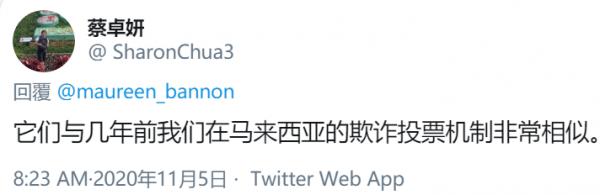
https://twitter.com/Dirkmaska/ /1324909887604879360
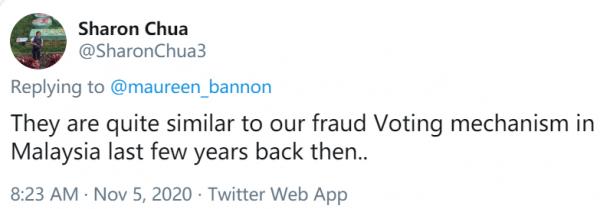
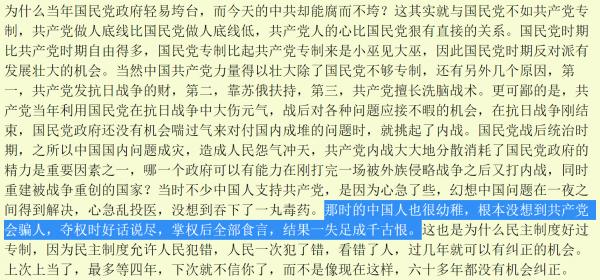
https://twitter.com/SharonChua3/ status/1324341681517449228 蔣公中正先生就是這樣垮台的:
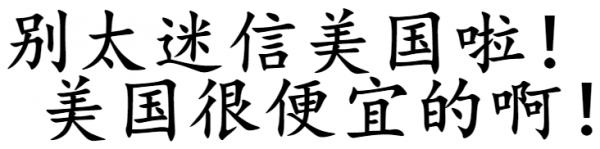
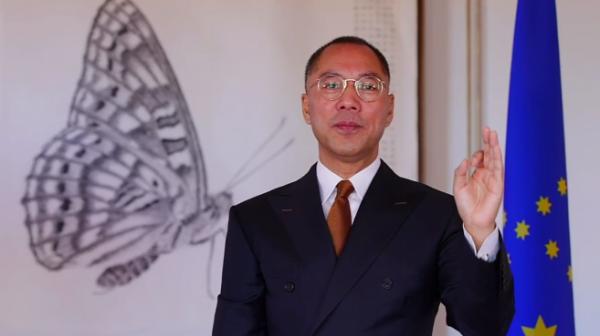
https://blog.creaders.net/u/ 3434/201108/91463.html 我和某個常委(有人留言遞話:賈慶林?) 有一次乘坐專列,我很榮幸的啊,聊完生意、 聊完這聊完那以後,跟我說了一句話, 當時我聽了我那耳朵噗一聲,被震住了, 他(語重心長地)說,文貴呀, 別太迷信美國啦! 美國很便宜的啊!
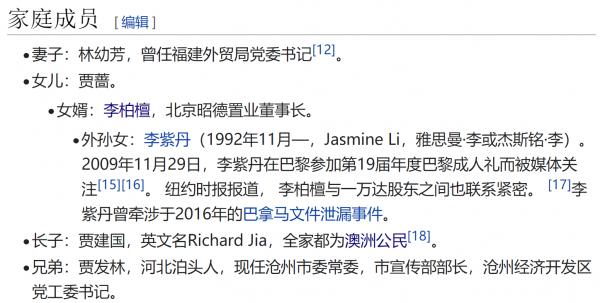
美國什麼東西很便宜呢? 然後,他說了幾個美國 政府高官的名字,幾個幾乎沒有一般中國人能夠 說出來的名字,只有真正知美、懂美的人才能 說出來的名字 ...... 這位老常委昨天剛剛從福建回到北京,他前天、 大前天都在福建呢。 我當時聽得傻眼了,我說你咋對這個這麼熟悉啊? 他笑了笑。因為,能對美國政府機構上層權力人物 達到這麼熟悉的程度,在中國上層人士中也不多見。 ...... ...... ...... 後來我到紐約,見了他家人,我傻眼了, 人家家人全在美國!而且沒有社會上的人知道! 人家能隱藏得這麼好,那比王岐山巧妙多了! 對吧,而且人家都是跟美國人通婚的; 而且,是這個人決定了習近平當總書記, 他是第一個推薦習、最關鍵的人物! 當時,還有這句話:說美國的所有情報部門、 還有所有最關鍵部門掌實權的人物, 都被我黨( Siubuding 同志慣用語)拿下了!! 不要太迷信美國,文貴,注意你的安全! ......
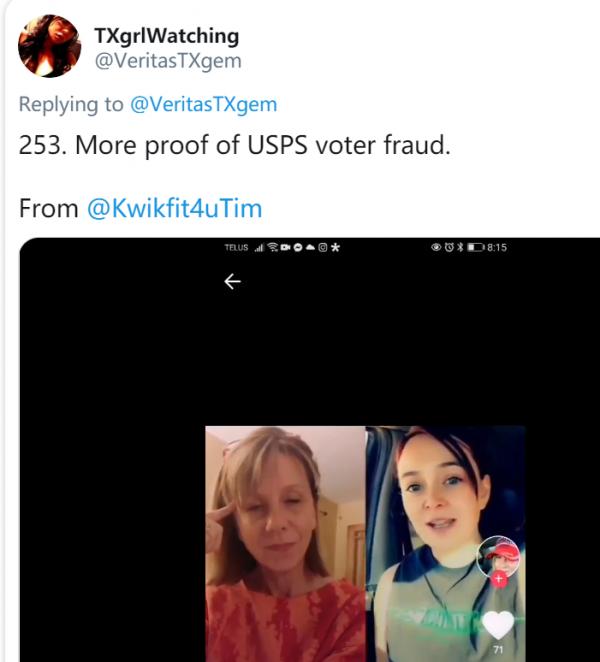
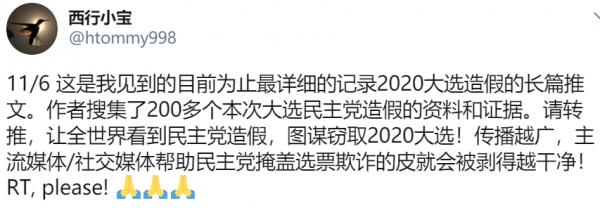
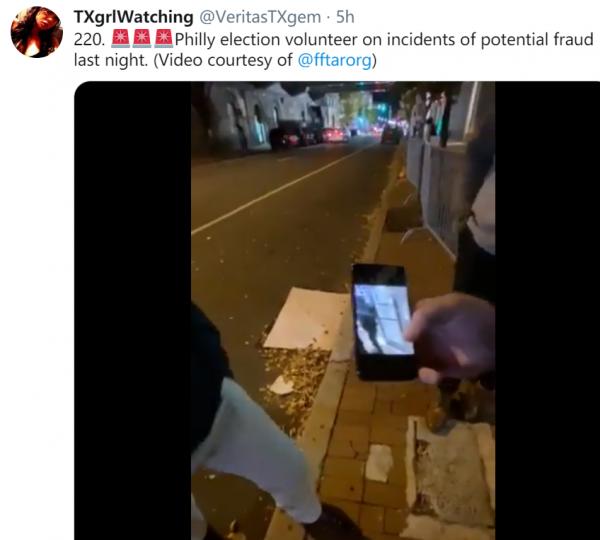
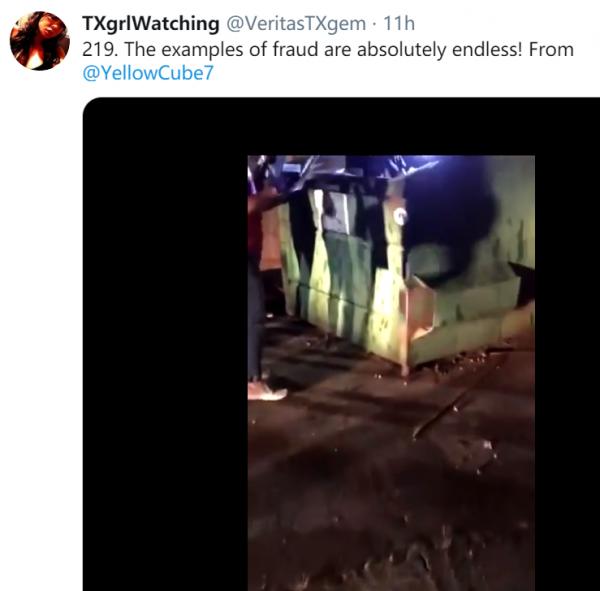
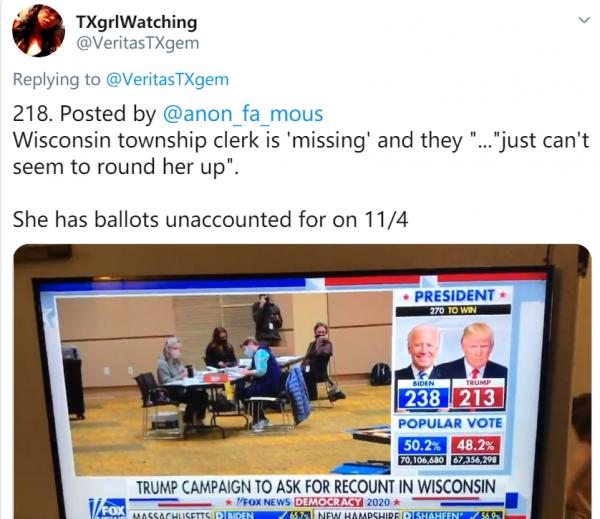
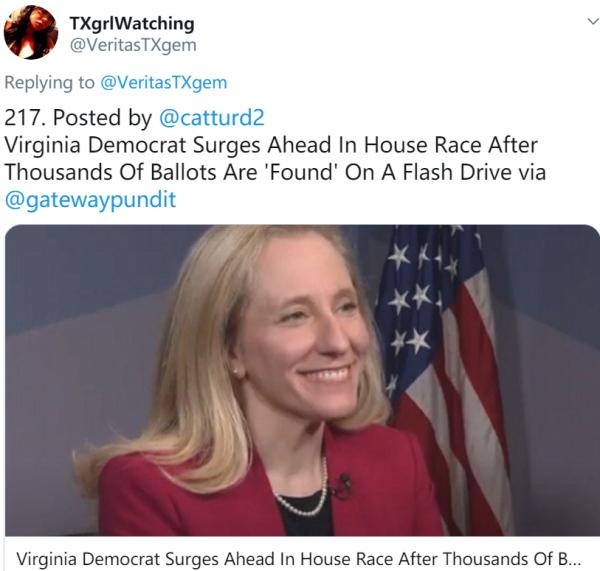
https://gtv.org/video/id=5fa6b 7eabd0d464fadf5a5f8 253個民主黨黨徒大肆欺詐 視頻音頻人證證據匯總如下:
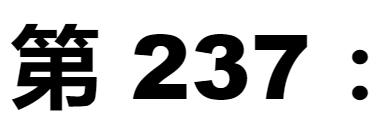
第 253 :
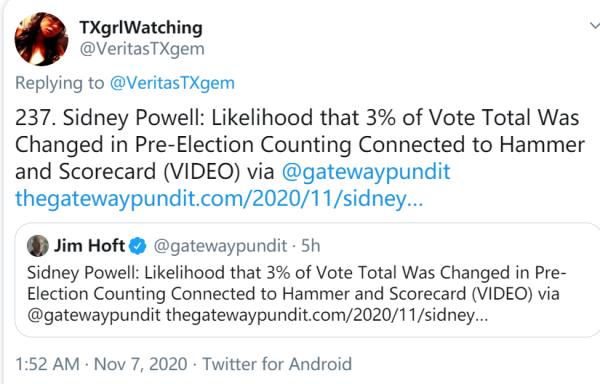
https://twitter.com/VeritasTX gem/status/13252626953823 27299
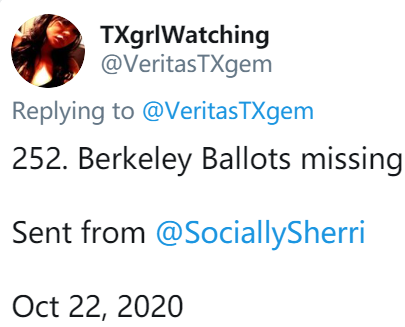
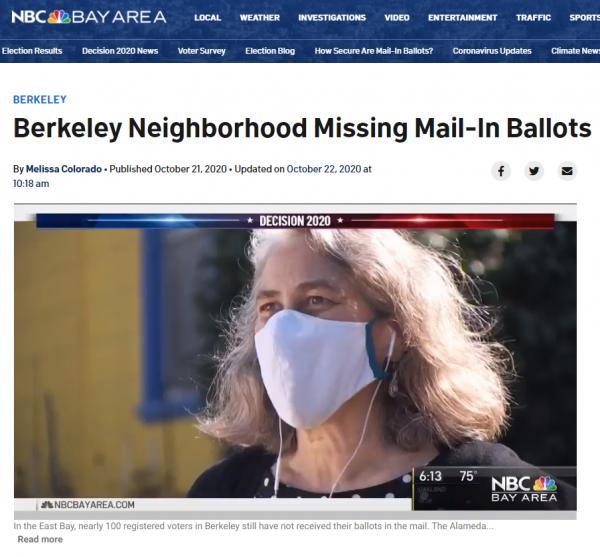
https://www.nbcbayarea.com/ news/local/east-bay/berkeley- neighborhood-missing-mail-in -ballots/2384072/
https://twitter.com/VeritasTXgem/status/1324967860221992961 https://twitter.com/VeritasTXgem
https://twitter.com/VeritasTXgem/status/1324768038198091776
https://twitter.com/VeritasTXgem |











 CEO Tom Burt talks with Cynthia McFadden of NBC News.
 A developer and principle architect work on software.
 政府關係高級副總裁Kathy Rogers和系統安全副總裁Chris Wlaschin。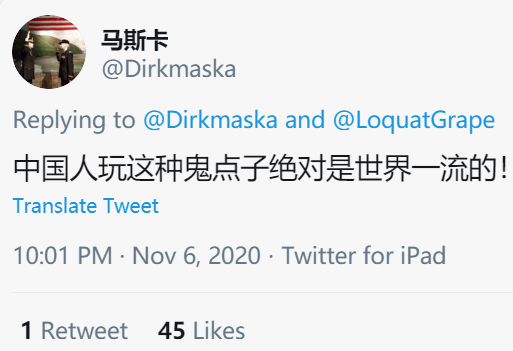



















|
|
 |
 |
| 實用資訊 | |
|
|
| 一周點擊熱帖 | 更多>> |
| 一周回復熱帖 |
| 歷史上的今天:回復熱帖 |
| 2019: | 中國一流大學學生的民族主義傾向有多強 | |
| 2019: | 川普狡猾,裝傻有貿易協議,安慰了市場 | |
| 2018: | 米國如何保障司法獨立?司法部長不聽話 | |
| 2018: | 謠傳穆勒要提起指控川普大兒子,川普要 | |
| 2017: | 老皮為了攻擊詆毀川普,竟然原諒了餓死 | |
| 2017: | 獨裁是人的天性?為什麼我就不想獨裁別 | |
| 2016: | Obama Admin & FBI Corruption | |
| 2016: | 為什麼文化程度低頭思想簡單的白人支持 | |
| 2015: | 很不理解老帽同學,為啥老愛問隱私性, | |
| 2015: | 知道老情為何只能幹聊了。 | |
