



| 时空二象之数学证明基础初探(I) |
| 送交者: 职老 2013年05月26日19:47:19 于 [教育学术] 发送悄悄话 |
|
最近俺提出的时空二象理论,TIME-SPACE DUALITY,一致没有进行逻辑数学表达,虽然使用了非逻辑表达。 与一路可里汀ELUCLIDEAN不同,明可夫斯基下的四维罗伦斯转换对称性,是Poincaré group 的,同时也衍生了前不久PERELMAN证明的POINCARE假猜。 最近研究了杨-米勒的百万美金悬赏假猜,发现其中的一些解释可以用做,特别是几个特殊的CONVENTION,比如 (-,+,+, +)与 (+,-,-,-)规定下的几个CONVENTIONS解释。 + − − −:
− + + +:
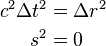
下面是股沟的一些解释大家自己看,黑黑 Spacetime intervalsIn a Euclidean space, the separation between two points is measured by the distance between the two points. The distance is purely spatial, and is always positive. In spacetime, the separation between two events is measured by the invariant interval between the two events, which takes into account not only the spatial separation between the events, but also their temporal separation. The interval, s2, between two events is defined as:  (spacetime interval), (spacetime interval), where c is the speed of light, and Δr and Δt denote differences of the space and time coordinates, respectively, between the events. (Note that the choice of signs for Certain types of world lines (called geodesics of the spacetime) are the shortest paths between any two events, with distance being defined in terms of spacetime intervals. The concept of geodesics becomes critical in general relativity, since geodesic motion may be thought of as "pure motion" (inertial motion) in spacetime, that is, free from any external influences. Spacetime intervals may be classified into three distinct types, based on whether the temporal separation ( Time-like interval For two events separated by a time-like interval, enough time passes between them for there to be a cause–effect relationship between the two events. For a particle traveling through space at less than the speed of light, any two events which occur to or by the particle must be separated by a time-like interval. Event pairs with time-like separation define a negative squared spacetime interval ( The measure of a time-like spacetime interval is described by the proper time,  (proper time). (proper time). The proper time interval would be measured by an observer with a clock traveling between the two events in an inertial reference frame, when the observer's path intersects each event as that event occurs. (The proper time defines a real number, since the interior of the square root is positive.) Light-like interval In a light-like interval, the spatial distance between two events is exactly balanced by the time between the two events. The events define a squared spacetime interval of zero ( Events which occur to or are initiated by a photon along its path (i.e., while traveling at Space-like intervalWhen a space-like interval separates two events, not enough time passes between their occurrences for there to exist a causal relationship crossing the spatial distance between the two events at the speed of light or slower. Generally, the events are considered not to occur in each other's future or past. There exists a reference frame such that the two events are observed to occur at the same time, but there is no reference frame in which the two events can occur in the same spatial location. For these space-like event pairs with a positive squared spacetime interval (  (proper distance). (proper distance). Like the proper time of time-like intervals, the proper distance of space-like spacetime intervals is a real number value. 对于连续的洛仑兹场,简单或者说目前最为认可的人类存在的3+1四维时空下,2006年MAX TEGMARK等计算了M+N时空的其他可能及其不稳定不预测性,并推断了比如2维时间下的一些可能,最后发现3+1可能是我们在四维下最佳的选择,虽然最近有很多2维引力的理论加入. 股沟一些阅读: Max Tegmark[17] expands on the preceding argument in the following anthropic manner. If T differs from 1, the behavior of physical systems could not be predicted reliably from knowledge of the relevant partial differential equations. In such a universe, intelligent life capable of manipulating technology could not emerge. Moreover, if T > 1, Tegmark maintains that protons and electrons would be unstable and could decay into particles having greater mass than themselves. (This is not a problem if the particles have a sufficiently low temperature.) If N > 3, Ehrenfest's argument above holds; atoms as we know them (and probably more complex structures as well) could not exist. If N < 3, gravitation of any kind becomes problematic, and the universe is probably too simple to contain observers. For example, when N < 3, nerves cannot cross without intersecting. In general, it is not clear how physical law could function if T differed from 1. If T > 1, subatomic particles which decay after a fixed period would not behave predictably, because time-like geodesics would not be necessarily maximal.[18] N = 1 and T = 3 has the peculiar property that the speed of light in a vacuum is a lower bound on the velocity of matter; all matter consists of tachyons.[17] However, signature (1,3) and (3,1) are physically equivalent. To call vectors with positive Minkowski "length" timelike is just a convention that depends on the convention for the sign of the metric tensor. Indeed, particle phyicists tend to use a metric with signature (+−−−) that results in positive Minkowski "length" for timelike intervals and energies while spatial separations have negative Minkowski "length". Relativists, however, tend to use the opposite convention (−+++) so that spatial separations have positive Minkowski length. 因此,无论是连续时空还是量子时空,对于物理学家而言,都需要考虑以下一些内容。 股沟阅读: For physical reasons, a spacetime continuum is mathematically defined as a four-dimensional, smooth, connected Lorentzian manifold 这些考虑包括: 1)时空的数学属性 2)拓扑学 3)时空对称性 4)量子化时空 所以,一些数学的计算,特别是3+1体系下的一些CONJECTURE比如COLLATZ猜想,完全可能有些突破。另外被证伪的MERTENS猜想也展示了类似最近发现的宇宙背景辐射的不均匀分布,而且似乎有被测定的所谓宇宙粒子总数的局限,导致了多重宇宙存在的可能。 这些思想其实又牵扯到了另外一个计算机世界也叫做量子世界的著名假猜:N和NP问题假猜,同时也包括了最初在公园641年ALGORITHEM提出的著名连续解决问题的思路,也叫做蝴蝶翅膀效应。从COLLATZ猜测的已知路径看,3+1的世界可能性会比较大些,如果量子世界存在的话。 但如果我们的大脑是台量子计算机,不遵循所谓的连续性计算的话,N=NP就可能是计算机世界的一个噩梦了,黑黑。 突然想起了一个类似N和NP的假猜,让大家考虑一下(目前还没有赏金,黑黑): 股沟提供给俺们的或许是N 和 NP的反证,也就是: 信息的提供或者获取如果越简单的话,解决问题就会越困难,对于人类的大脑量子计算 也叫做:I 和 NI (我和非我) 问题 (委婉待续 |
 above follows the
  ) or the spatial separation (
 ) of the two events is greater.
 ) and may be said to occur in each other's future or past. There exists a
  :
: 
 ). Light-like intervals are also known as "null" intervals.
  , the speed of light) all have light-like separation. Given one event, all those events which follow at light-like intervals define the propagation of a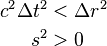
 ), the measurement of space-like separation is the
  :
:  . This means the smooth
  has signature
  . The metric determines the geometry of spacetime, as well as determining the
  are used. Moreover, for simplicity's sake, the speed of light
|
 |
 |
| 实用资讯 | |
|
|
| 一周点击热帖 | 更多>> |
| 一周回复热帖 |
| 历史上的今天:回复热帖 |
| 2012: | 學術論壇最好只談與學術有關的內容 | |
| 2011: | 《京华时报》:13名患者进京反驳肖传国 | |
| 2011: | "一沙一世界"的英汉翻译 | |
| 2010: | “新读书无用论”之我见 | |
| 2010: | 欧阳峰:引力究竟是什么? | |
| 2009: | 关于什么是“中国人”的几句多余的话 | |
| 2009: | 儒林和文苑的“优伶化” | |
